
Overview
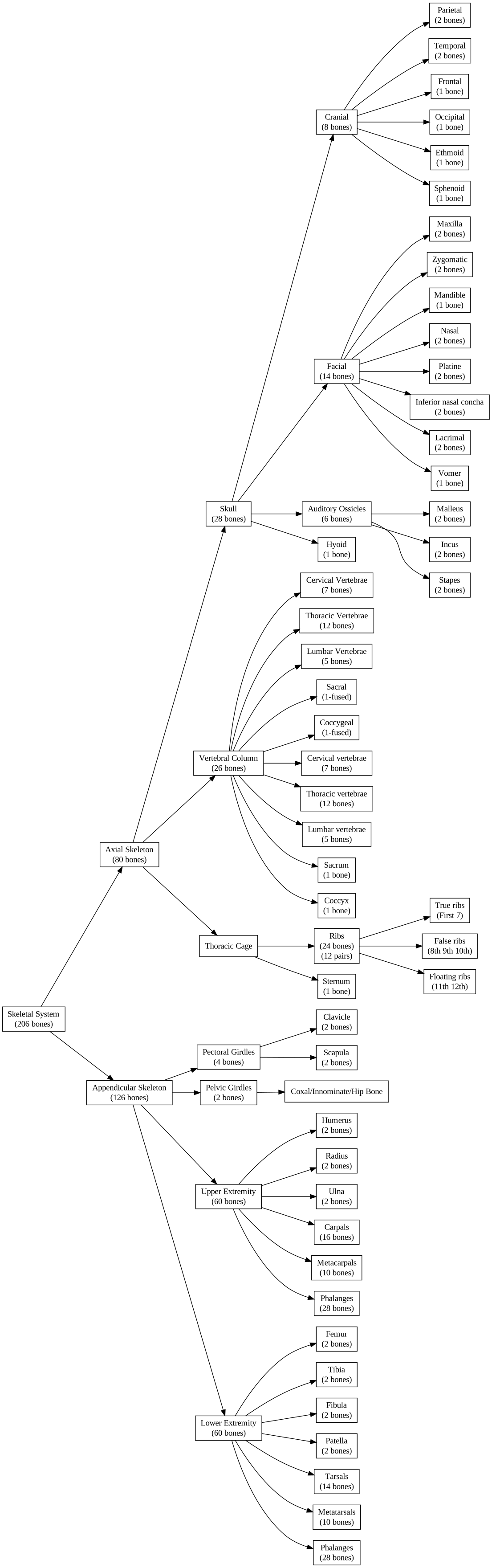
Fractures heal best when the bone ends are held in good alignment and protected from motion across the fracture line. Stable fractures can heal in a cast; unstable, displaced, or intra-articular fractures require surgical fixation. Open reduction and internal fixation — ORIF — is the umbrella term for that operation across dozens of bones and fracture patterns.
How the Procedure Works
The fracture is exposed through an incision tailored to the bone and pattern. Fragments are reduced into anatomic alignment under direct vision and held there with plates, screws, rods, or pins chosen for the biomechanics of the specific fracture. Stable fixation allows early motion and faster functional recovery.
When to Consider Fracture ORIF (open Reduction and Internal Fixation)
Fracture ORIF (open reduction and internal fixation) is generally offered when symptoms, imaging, and a trial of non-operative care together point to surgery as the next step. The typical picture includes:
Displaced fracture
A fracture unlikely to heal in acceptable alignment without surgical reduction.
Intra-articular fracture
A fracture crossing a joint surface, where any step-off accelerates post-traumatic arthritis.
Polytrauma or multiple fractures
Multiple injured bones, where early mobilization is essential for overall recovery.
Conditions This Treats
Physicians Who Perform Fracture ORIF (open Reduction and Internal Fixation)


David B. Templin, M.D.

Trent Twitero, M.D.
Providers Who Surgically Assist with Fracture ORIF (open Reduction and Internal Fixation)

Sydney Georg, PA-C

Ben Swanner, PA-C
Further Reading
External patient-education references and related OSI pages for additional background: