
Overview
what it is and why it matters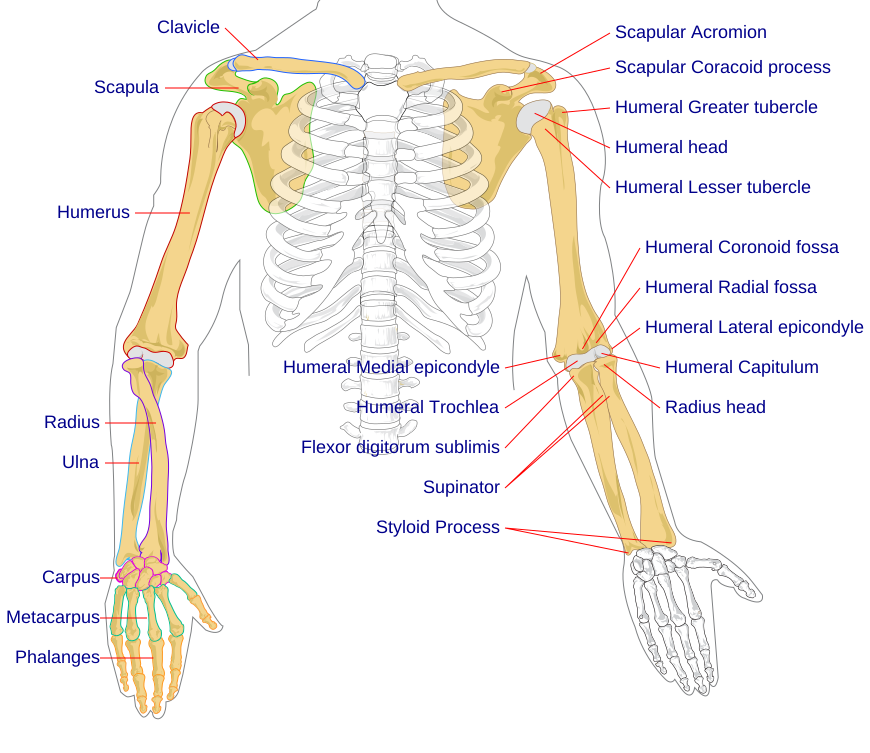
Cubital tunnel syndrome is the second most common compressive neuropathy in the upper extremity (after carpal tunnel syndrome). The ulnar nerve passes through the cubital tunnel — a bony groove behind the medial epicondyle at the elbow — where it can be compressed by flexion, direct pressure, or structural abnormalities. Prolonged elbow flexion (sleeping with arms bent, talking on the phone) and leaning on the elbow are common aggravating factors.
Diagnosis
exam first, imaging secondNumbness and tingling in the ring and small fingers, especially with elbow flexion or pressure over the nerve at the medial elbow. In advanced cases, intrinsic hand muscle weakness and atrophy (visible between the knuckles) develop. Tinel's sign (tapping over the cubital tunnel reproduces tingling in the fingers) and the elbow flexion test are positive. Electrodiagnostic studies (NCS/EMG) confirm the diagnosis and assess severity.
Treatment Path
how care progresses at OSI1
Elbow extension night splint
Keeping the elbow straight during sleep prevents the prolonged flexion that compresses the nerve — highly effective for mild to moderate cases.
2
Activity modification
Avoiding leaning on the elbow and prolonged flexion.
3
Elbow pad
Cushioning the elbow during the day to prevent direct nerve compression.
NSAIDs
For acute inflammatory flares.
Surgical Options at OSI
if non-operative care isn't enoughPersistent symptoms despite conservative measures, moderate-to-severe nerve compression on electrodiagnostic testing, and intrinsic weakness are indications for surgical decompression.
Providers Who Treat Cubital Tunnel Syndrome
sports-medicine team

David B. Templin, M.D.

Trent Twitero, M.D.
Further Reading
authoritative sourcesExternal patient-education references and related OSI pages for additional background: