
Overview
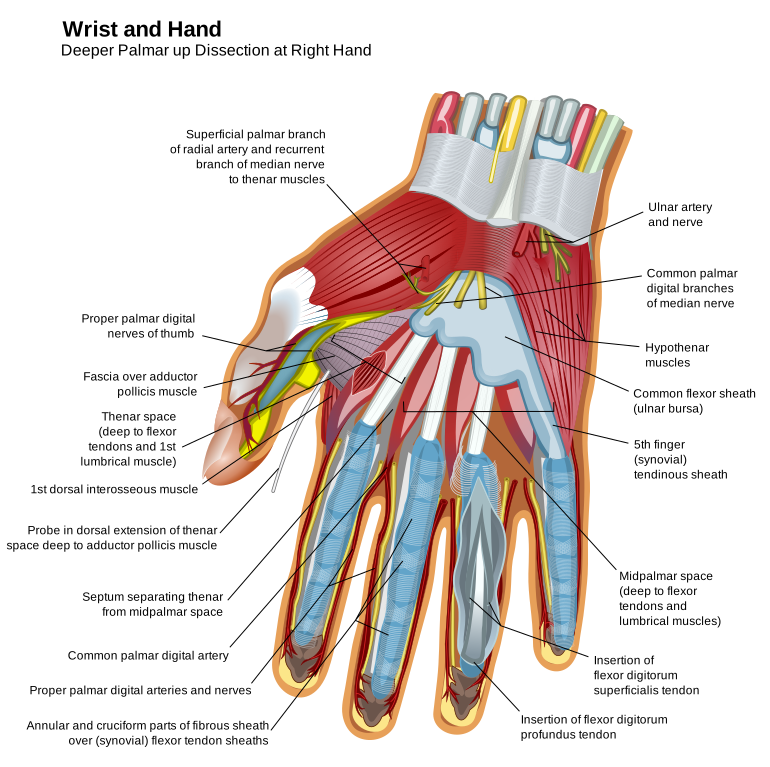
The distal radius is the most commonly fractured bone in the adult skeleton. When the fracture is displaced, unstable, or extends into the wrist joint surface, casting alone will not hold alignment. Surgical fixation restores length, angulation, and joint congruity — important for long-term wrist function and cosmetic appearance.
How the Procedure Works
We approach through a volar (palm-side) incision, working through the interval between the flexor carpi radialis and the radial artery — this gives direct access to the fracture while keeping extensor tendons and the dorsal sensory branch of the radial nerve out of harm's way. The fracture is reduced under fluoroscopy: we restore radial length, volar tilt, and radial inclination to within a few degrees of the uninjured side, because small residual malreduction of the joint surface accelerates wrist arthritis. A pre-contoured locking plate sits against the volar cortex; subchondral screws through the distal row lock the articular fragments in position from below, supporting the joint surface the way scaffolding supports a ceiling. Fluoroscopy in multiple planes confirms screw length — dorsal screw penetration into the extensor tendons is a known complication, avoided by careful intraoperative imaging. Rigid fixation means the patient starts wrist motion within days rather than spending six weeks in a cast.
When to Consider Distal Radius ORIF
Distal radius ORIF is generally offered when symptoms, imaging, and a trial of non-operative care together point to surgery as the next step. The typical picture includes:
Displaced or unstable fracture
A fracture that has shortened, angulated, or displaced beyond acceptable limits — or one likely to do so in a cast.
Intra-articular step-off
A fracture that crosses into the wrist joint surface with a step that must be reduced to preserve long-term function.
Active patients
Patients requiring an early return of wrist function for work or activity.
Conditions This Treats
Physicians Who Perform Distal Radius ORIF


David B. Templin, M.D.

Trent Twitero, M.D.
Providers Who Surgically Assist with Distal Radius ORIF

Sydney Georg, PA-C

Ben Swanner, PA-C
Further Reading
External patient-education references and related OSI pages for additional background: