
Overview
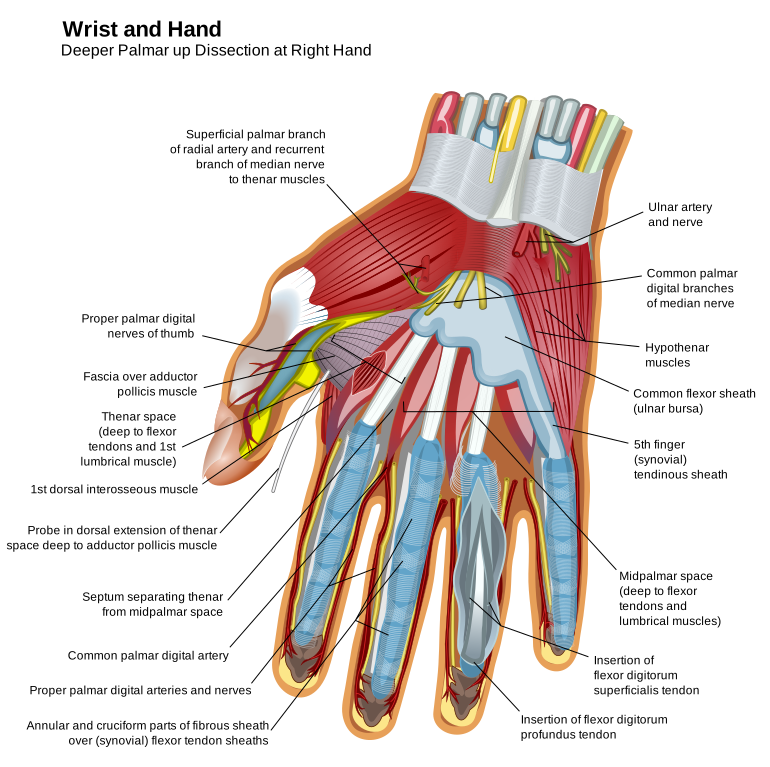
The scaphoid is a small wrist bone with a tenuous blood supply that enters from the distal end. A fracture — especially one through the middle (waist) or proximal pole — can cut off the blood supply to the proximal fragment and lead to nonunion or avascular necrosis.
Operative fixation is considered for displaced fractures, proximal-pole fractures, and fractures in active patients or athletes who want a shorter immobilization period. Cast treatment remains an option for non-displaced distal fractures, but healing times can exceed three months.
Why it's done
Scaphoid fixation is typically considered when imaging and the clinical picture together indicate that the fracture will not reliably heal or function without surgical stabilization. Common indications include:
Displaced fracture
Any displacement raises the nonunion rate significantly.
Proximal-pole fracture
Poor blood supply demands stable fixation.
Delayed presentation
A fracture that hasn't started to heal within a few weeks.
Active or athletic patient
To shorten immobilization and return to sport.
Nonunion from prior non-operative care
Requires fixation plus bone graft.
How it works
A headless compression screw is placed down the long axis of the scaphoid under fluoroscopic guidance. The approach can be either from the palm side (volar) or the back side (dorsal), depending on the fracture location.
For nonunion or avascular necrosis, a vascularized or non-vascularized bone graft is combined with the screw. Small incisions and percutaneous techniques are used when possible.
Recovery
The wrist is splinted for comfort for a week or two and then transitioned to a removable brace. Hand-therapy motion exercises begin once the wound is healed. Return to sports typically requires radiographic evidence of healing, often confirmed with a CT scan at three months. Return to work depends on demands. The screw is left in place unless symptomatic.
Contact
For questions about this procedure or to schedule an evaluation, call the office at (830) 625-0009 or request an appointment online.
Further Reading
External patient-education references and related OSI pages for additional background: