
Overview
what it is and why it matters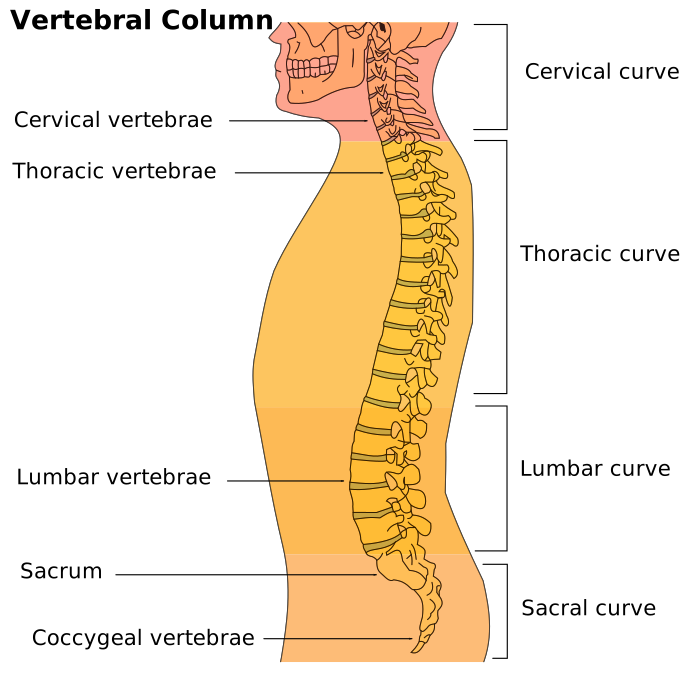
Coccydynia is pain in the coccyx (tailbone) at the very base of the spine. It most commonly follows a direct fall onto the buttocks, childbirth, or repetitive microtrauma (e.g., prolonged cycling). In some patients no clear cause is found. The pain is characteristically exacerbated by sitting (especially on hard surfaces), by the transition from sitting to standing, and sometimes by bowel movements.
It is more common in women (5:1) and in patients with a higher BMI.
Diagnosis
exam first, imaging secondStanding and sitting lateral coccyx X-rays can reveal fracture, dislocation, hypermobility (>25° flexion-extension), or an abnormally angled coccyx. Dynamic X-rays are more informative than static films. MRI is ordered when an occult fracture, infection, or mass is suspected.
Treatment Path
how care progresses at OSICoccyx cushion (donut pillow)
Offloads the coccyx during prolonged sitting.
NSAIDs
First-line pain management.
Physical therapy
Pelvic floor therapy and manual coccyx mobilization can be effective, particularly in women.
Coccygeal nerve block / corticosteroid injection
Fluoroscopy-guided injection around the coccygeal nerve provides significant relief in many patients; repeatable.
If Surgery Is Truly Needed
rare for most patientsSurgery helps only a small minority of spine patients — usually those with a specific structural problem plus a nerve issue that isn’t getting better with a structured non-operative trial. When that step is genuinely warranted, OSI coordinates it the same way we coordinate every other part of your care: imaging, records, and the handoff are handled for you, so no part of the process falls on your shoulders.
Further Reading
authoritative sourcesExternal patient-education references and related OSI pages for additional background: