
Overview
what it is and why it matters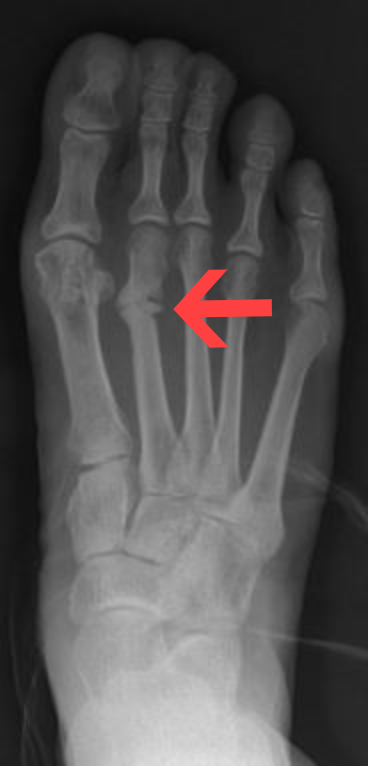
Metatarsal stress fractures are the most common stress fractures of the foot. The second and third metatarsal shafts are most often affected in runners and military recruits ("march fracture"). The fifth metatarsal base (Jones fracture zone) is a critical exception — see the Jones fracture page. Risk factors include a sudden increase in training volume, low bone density, and biomechanical factors (cavus foot, leg length discrepancy).
Diagnosis
exam first, imaging secondPlain X-rays are often negative for 2–3 weeks. MRI is the most sensitive early imaging test and shows periosteal edema before cortical fracture. Bone scan is an alternative. Clinical diagnosis is based on localized point tenderness over the metatarsal shaft worsened by activity.
Treatment Path
how care progresses at OSIActivity modification
Cessation of the offending activity. Low-impact cross-training (swimming, cycling) is encouraged.
Stiff-soled shoe or walking boot
Reduces metatarsal bending forces during healing (4–8 weeks).
Bone health optimization
Calcium, vitamin D, and workup for bone density if indicated.
Surgical Options at OSI
if non-operative care isn't enoughMost metatarsal shaft stress fractures heal without surgery. Surgery is rare — reserved for displaced fractures or nonunions.
Further Reading
authoritative sourcesExternal patient-education references and related OSI pages for additional background: