
Overview
what it is and why it matters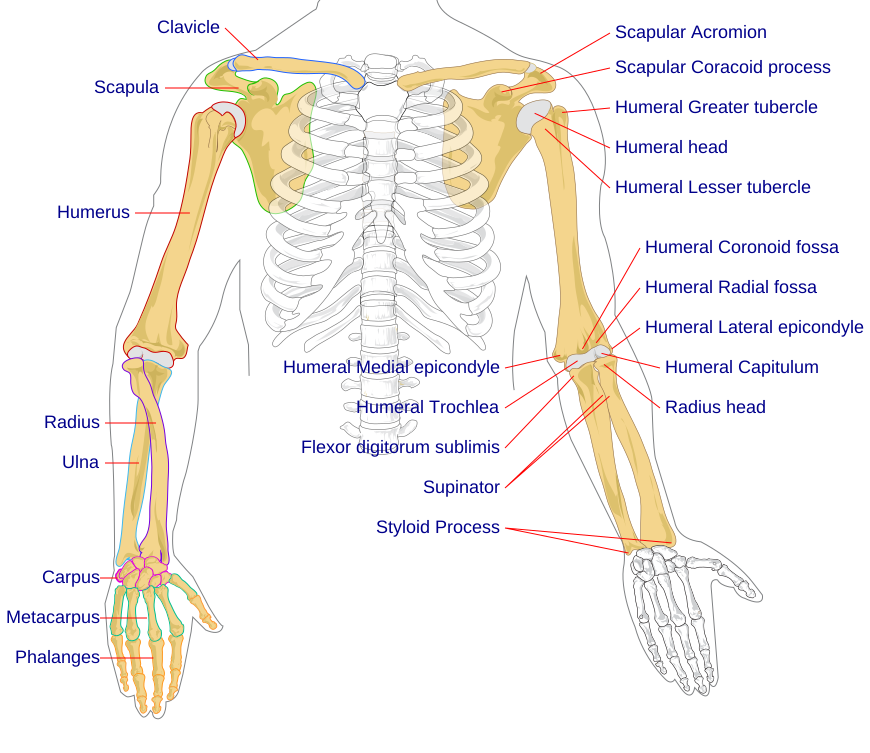
The "terrible triad" of the elbow — posterior dislocation combined with fractures of the coronoid and the radial head — represents the most unstable and surgically demanding elbow injury. The combination disrupts every stabilizer of the elbow: the bony buttresses (coronoid and radial head), the medial and lateral ligamentous complexes, and the anterior capsule. Without surgical reconstruction of all injured structures, the elbow will re-dislocate.
Diagnosis
exam first, imaging secondHigh-energy elbow injury with obvious deformity. Post-reduction CT is essential to characterize both fractures and plan staged reconstruction. Careful neurovascular examination is mandatory.
Treatment Path
how care progresses at OSI1
Emergency closed reduction
Initial reduction of the dislocation, followed by imaging and surgical planning.
Surgical Options at OSI
if non-operative care isn't enoughAll terrible triad injuries require surgical repair/fixation to achieve a stable, functional elbow.
Providers Who Treat Terrible Triad Injury
sports-medicine team

David B. Templin, M.D.

Trent Twitero, M.D.
Further Reading
authoritative sourcesExternal patient-education references and related OSI pages for additional background: