
Overview
what it is and why it matters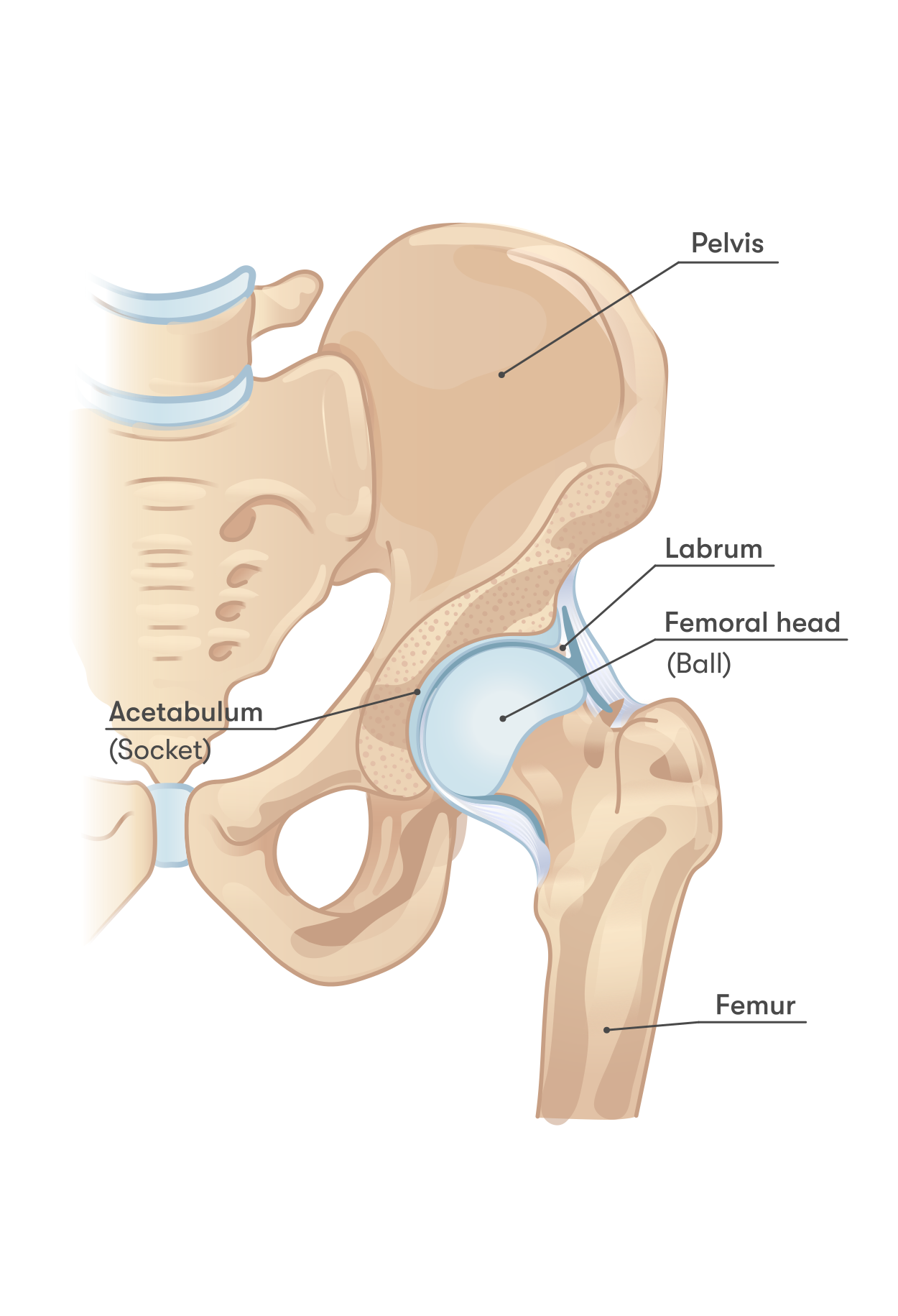
The hip flexors — primarily the iliopsoas (iliacus + psoas) and the rectus femoris (front quadriceps) — pull the thigh toward the chest. A strain is a stretch or partial tear of the muscle or its tendon, graded 1 (mild) through 3 (complete rupture). Hip flexor strains are common in sprinters, soccer and football players, and martial artists — any activity with explosive hip flexion or a sudden eccentric load.
Most strains affect the musculotendinous junction where the muscle transitions to tendon. Complete ruptures of the iliopsoas are uncommon but do occur, particularly avulsions at the lesser trochanteric attachment in adolescent athletes.
Diagnosis
exam first, imaging secondAnterior hip pain at the groin crease, worsened by resisted hip flexion or hip flexion against gravity. Swelling or bruising over the proximal thigh may be visible. MRI is the definitive study to grade the tear and locate its extent. X-ray in adolescents checks for lesser trochanter avulsion fracture.
Treatment Path
how care progresses at OSI1
RICE — rest, ice, compression, elevation
Acute management to control swelling and pain in the first 48–72 hours.
2
Activity modification
Avoiding provocative loading while the muscle heals; gentle range-of-motion exercise is started early.
3
Physical therapy
Progressive stretching and eccentric strengthening returns the hip to full function; return-to-sport criteria are used to prevent re-injury.
NSAIDs
Short course during the acute inflammatory phase.
Surgical Options at OSI
if non-operative care isn't enoughComplete avulsion of the lesser trochanter with significant retraction in a young active patient may warrant surgical reattachment. Most strains heal without surgery.
Providers Who Treat Hip Flexor Strain
sports-medicine team

David B. Templin, M.D.

Trent Twitero, M.D.
Further Reading
authoritative sourcesExternal patient-education references and related OSI pages for additional background: