
Overview
what it is and why it matters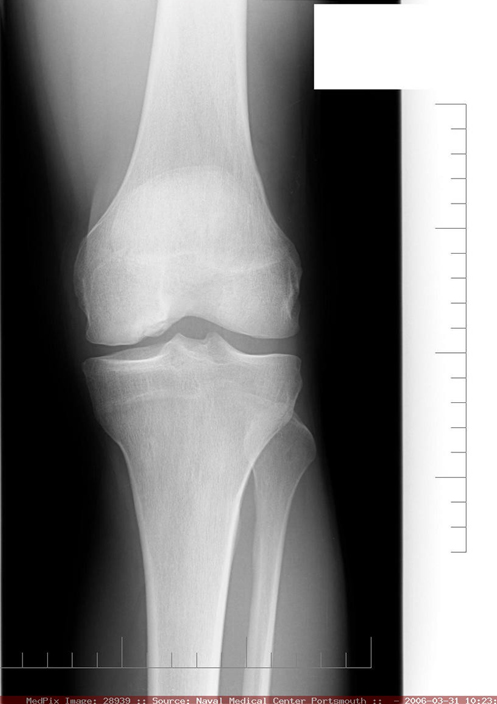
Osteochondritis dissecans (OCD) is a condition where a segment of bone and its overlying cartilage loses its blood supply, becomes necrotic, and may separate from the underlying bone — producing a loose fragment within the joint. The medial femoral condyle is the most common site in the knee. OCD is most common in active adolescents and young adults; causes are debated but likely involve repetitive microtrauma.
Stable OCD lesions — where the fragment is intact and not displaced — often heal with activity modification and unloading. Unstable or displaced lesions require surgery.
Diagnosis
exam first, imaging secondVague activity-related knee pain, sometimes with effusion or mechanical symptoms from a loose body. X-rays show a radiolucent lesion at the femoral condyle. MRI is essential to assess stability — fluid tracking behind the fragment on T2 imaging indicates an unstable lesion. The patient's skeletal maturity (open vs. closed growth plates) significantly influences prognosis and treatment.
Treatment Path
how care progresses at OSI1
Activity modification & unloading
For stable lesions in patients with open growth plates: protected weight-bearing (crutches), activity restriction, and close monitoring with serial MRI. The healing potential is high in skeletally immature patients.
2
Physical therapy
Quadriceps strengthening once healing is confirmed.
Surgical Options at OSI
if non-operative care isn't enoughUnstable OCD lesions (fluid behind the fragment), loose bodies within the joint, failed conservative care, and lesions in skeletally mature patients (poor intrinsic healing potential) are surgical indications.
Providers Who Treat Osteochondritis Dissecans
sports-medicine team

David B. Templin, M.D.

Trent Twitero, M.D.
Further Reading
authoritative sourcesExternal patient-education references and related OSI pages for additional background: