
Overview
what it is and why it matters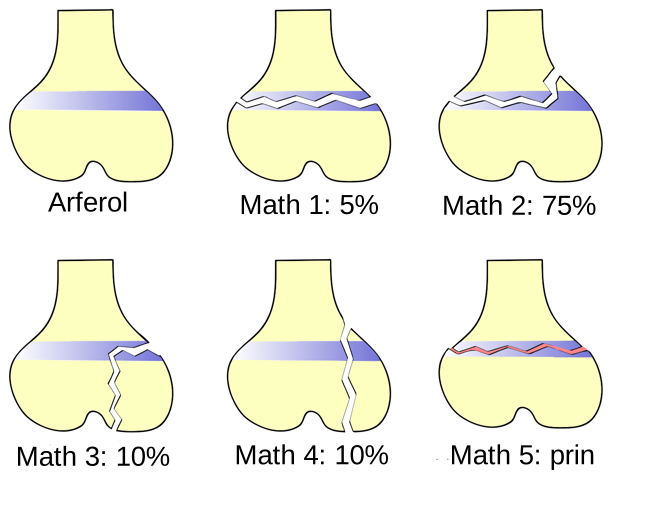
Fractures in children differ fundamentally from adult fractures because of the presence of growth plates (physes), the greater plasticity of pediatric bone, and the remarkable healing and remodeling capacity of growing bone. The Salter-Harris classification describes physis involvement and guides prognosis: S-H I (through physis only) and II (includes metaphysis — most common) generally have excellent outcomes; S-H III and IV (involve the articular surface) require anatomic reduction; S-H V (crush injury) carries growth arrest risk.
Pediatric bone can tolerate incomplete fractures (greenstick, torus/buckle) that are unique to children and typically heal without surgery.
Diagnosis
exam first, imaging secondX-rays in two planes. Comparison views of the opposite (normal) side are often helpful for physeal fractures. CT is added for complex articular injuries. MRI is valuable for physeal injuries and for detecting cartilaginous structures not visible on X-ray.
Treatment Path
how care progresses at OSICast immobilization
The majority of pediatric fractures — including most growth plate injuries — heal with appropriate casting.
Splinting
Acute fracture stabilization; converted to cast after swelling resolves.
Surgical Options at OSI
if non-operative care isn't enoughSurgery is indicated for displaced physeal (S-H III-IV) fractures, fractures with neurovascular compromise, unstable forearm fractures, and femur fractures in older children.
Further Reading
authoritative sourcesExternal patient-education references and related OSI pages for additional background: