
Overview
what it is and why it matters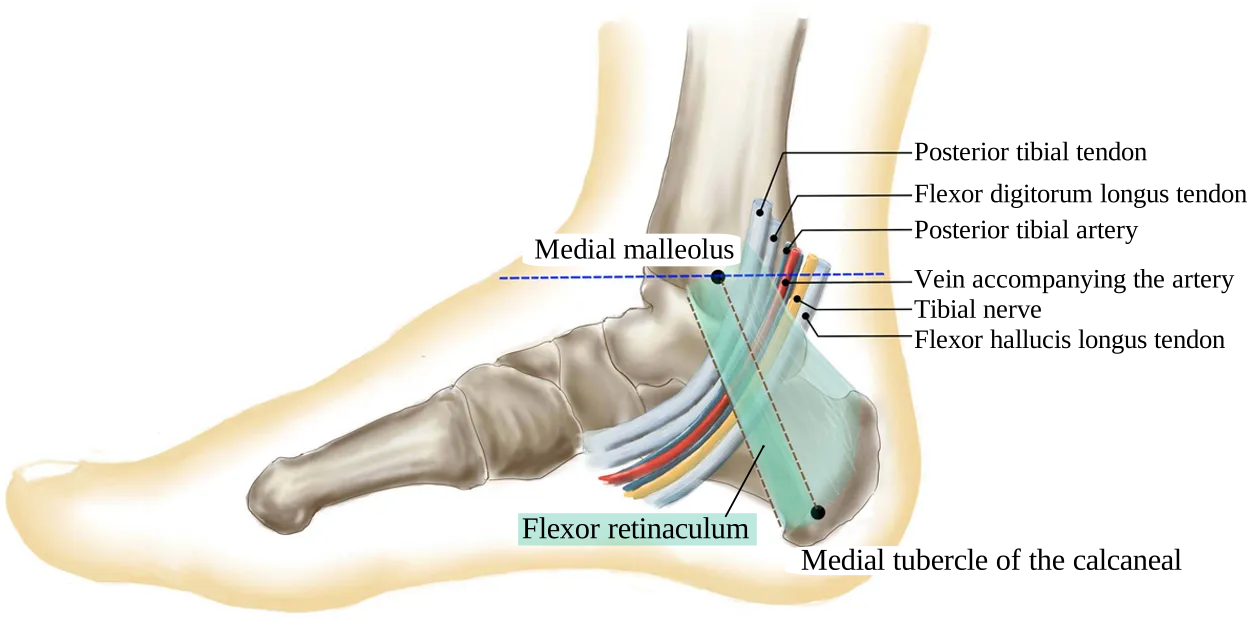
Tarsal tunnel syndrome is compression of the tibial nerve (or one of its branches) as it passes through the tarsal tunnel — a fibro-osseous canal on the medial aspect of the ankle beneath the flexor retinaculum. It is the foot analogue of carpal tunnel syndrome. Causes include a space-occupying lesion (ganglion, lipoma, varicosity), flatfoot deformity, post-traumatic fibrosis, or idiopathic.
Symptoms include burning, tingling, or numbness on the plantar surface of the foot, often worse at night or after prolonged standing.
Diagnosis
exam first, imaging secondTinel's sign behind the medial malleolus. NCS/EMG localizes the compression and assesses severity. MRI and ultrasound identify space-occupying lesions. Tarsal tunnel syndrome is often over- and under-diagnosed; careful NCS interpretation is essential.
Treatment Path
how care progresses at OSIOrthotic support
Medial arch support reduces tension on the tibial nerve in flatfoot-related cases.
NSAIDs / neuropathic agents
Gabapentin or amitriptyline for neuropathic pain.
Corticosteroid injection
Ultrasound-guided injection can reduce perineural inflammation.
Surgical Options at OSI
if non-operative care isn't enoughSurgical decompression is indicated for confirmed NCS-positive tarsal tunnel syndrome with a space-occupying lesion, or persistent symptoms after 3+ months of conservative care.
Further Reading
authoritative sourcesExternal patient-education references and related OSI pages for additional background: