
Overview
what it is and why it matters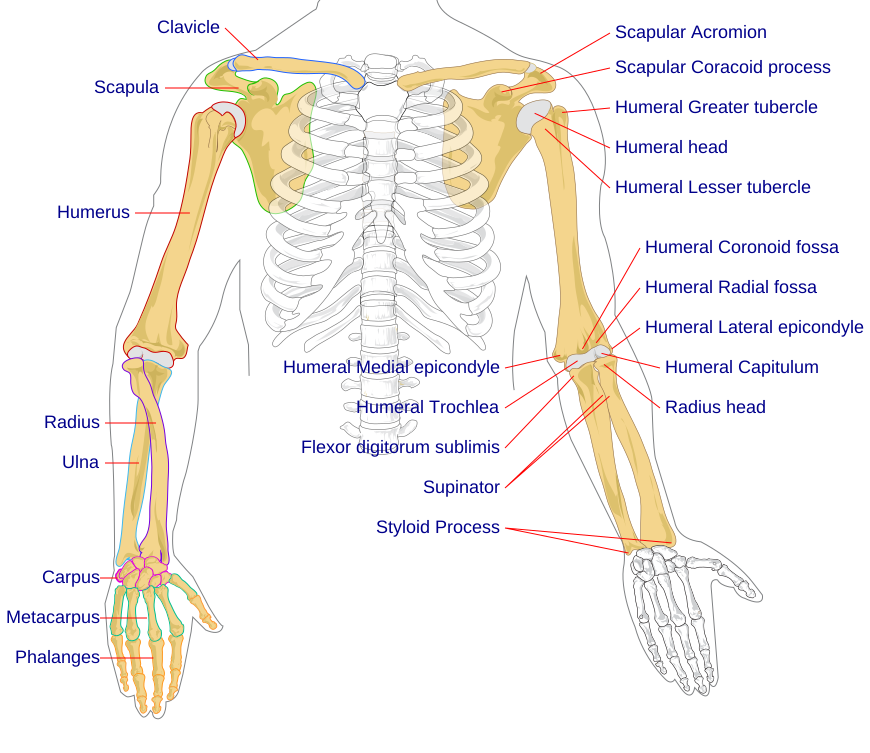
Osteochondritis dissecans (OCD) of the capitellum occurs when a segment of the lateral femoral condyle equivalent in the elbow — the capitellum — loses its blood supply, undergoes necrosis, and may form a loose fragment within the joint. It most commonly affects adolescent throwers (especially baseball players) and gymnasts aged 10–17, due to repetitive compressive and rotational forces on the lateral elbow. Early detection and treatment are critical to prevent loose body formation, permanent cartilage damage, and early arthritis.
Diagnosis
exam first, imaging secondLateral elbow pain and swelling in a young athlete, with limited extension. X-rays may show a radiolucent lesion on the capitellum. MRI evaluates stability — fluid behind the fragment on T2 indicates an unstable lesion. CT arthrography characterizes the fragment for operative planning.
Treatment Path
how care progresses at OSI1
Activity restriction and rest
For stable lesions in skeletally immature patients — avoiding throwing and loading for 3–6 months, with serial imaging to monitor healing.
Surgical Options at OSI
if non-operative care isn't enoughUnstable lesions, loose bodies in the joint, and stable lesions that fail to heal with non-operative management require surgery.
Providers Who Treat Osteochondritis Dissecans of the Capitellum
sports-medicine team

David B. Templin, M.D.

Trent Twitero, M.D.
Further Reading
authoritative sourcesExternal patient-education references and related OSI pages for additional background: