
Overview
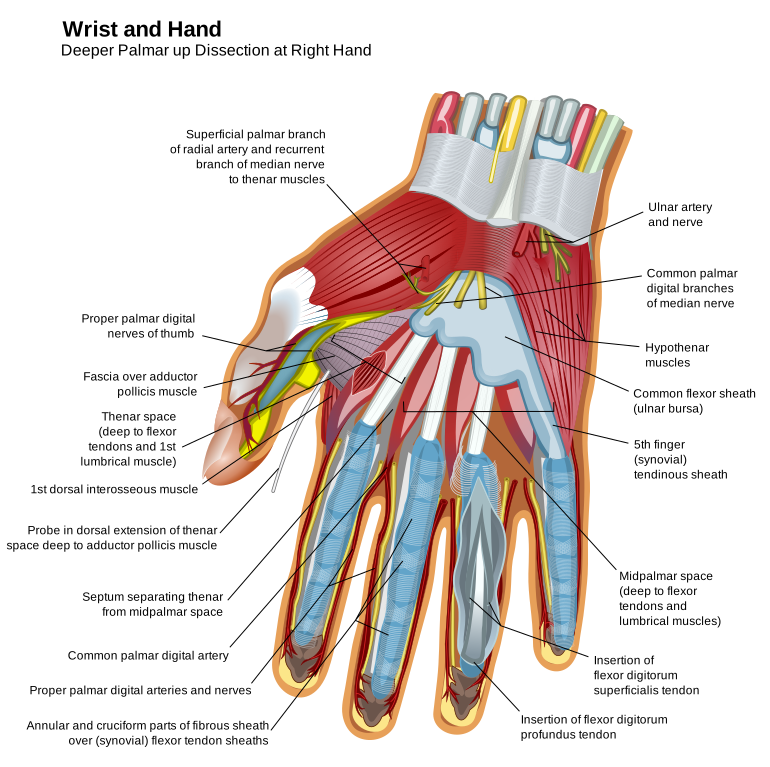
The phalanges are the three bones of each finger (or two of the thumb). Most phalangeal fractures heal well with buddy taping or a short splint. Surgery is reserved for fractures that are displaced, rotated, intra-articular, or otherwise unstable in a splint.
The threshold for operating on the hand is set by rotation and joint involvement rather than by X-ray angle alone. Even small malalignments can cause crossover of the fingers or loss of joint motion.
Why it's done
Phalangeal ORIF is typically considered when imaging and the clinical picture together indicate that the fracture will not reliably heal or function without surgical stabilization. Common indications include:
Rotational malalignment
Crossover of the fingers during flexion.
Intra-articular fracture with step-off
Joint step-off leads to stiffness and arthritis.
Unstable oblique or spiral fracture
Shortens or displaces despite splinting.
Open fracture or associated tendon injury
Requires urgent exposure and stabilization.
How it works
Options include percutaneous K-wire pinning under fluoroscopic guidance, lag-screw fixation for oblique patterns, and low-profile plate-and-screw fixation for comminuted or intra-articular patterns. Incisions are kept small to minimize scarring and stiffness.
Hand therapy is often started in the immediate postoperative period even when pins or plates are in place.
Recovery
The hand is splinted briefly and then started on early protected motion guided by a hand therapist. Pins are removed in the clinic at four to six weeks. Stiffness, tendon adhesion, and malunion are the main complications. Most patients regain functional motion by three months with diligent therapy.
Contact
For questions about this procedure or to schedule an evaluation, call the office at (830) 625-0009 or request an appointment online.
Further Reading
External patient-education references and related OSI pages for additional background: