
Overview
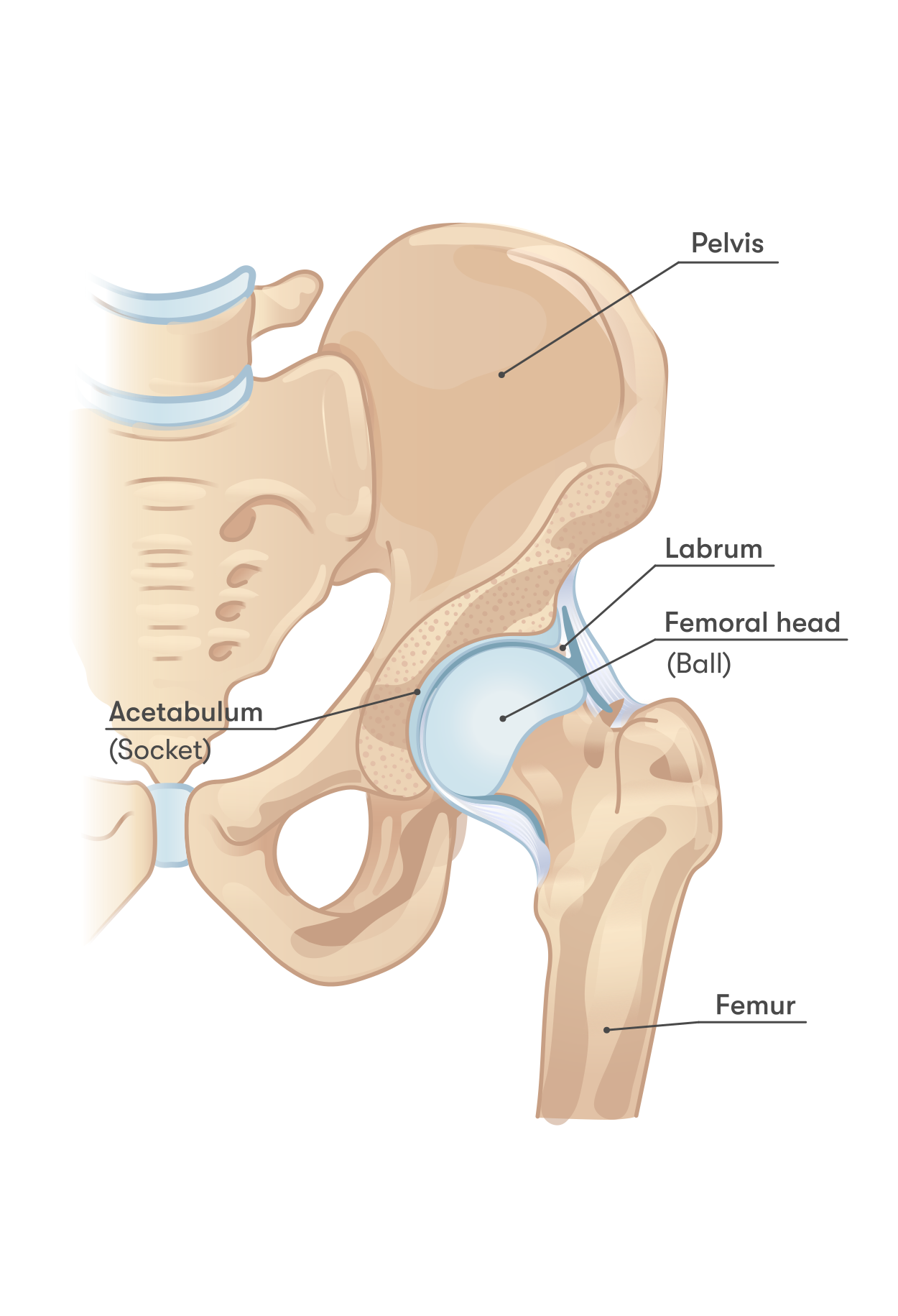
The femoral neck is the segment of bone between the femoral head and the upper shaft of the femur. A fracture here disrupts the blood supply to the femoral head, which puts the head at risk for avascular necrosis and nonunion. This risk rises sharply with displacement.
In younger patients and in non-displaced fractures, cannulated screws or a hip-screw-and-plate construct preserves the natural femoral head. In older or lower-demand patients with displaced fractures, a partial hip replacement (hemiarthroplasty) is usually more reliable. These fractures are typically treated urgently to minimize complications.
Why it's done
Femoral neck fracture fixation is typically considered when imaging and the clinical picture together indicate that the fracture will not reliably heal or function without surgical stabilization. Common indications include:
Displaced fracture in an older patient
Hemiarthroplasty avoids the high nonunion and avascular necrosis rates of attempted fixation.
Non-displaced or valgus-impacted fracture
Screw fixation preserves the native head and neck.
Young patient with a displaced fracture
Urgent anatomic reduction and rigid fixation give the best chance of preserving the head.
Inability to tolerate prolonged recumbency
Surgery allows rapid mobilization, which is especially important in elderly patients.
How it works
For screw fixation, three cannulated screws are placed in parallel through small incisions on the side of the hip under fluoroscopic guidance. A sliding hip screw-and-plate construct is an alternative for certain patterns.
For hemiarthroplasty, a standard hip approach is used to remove the fractured head. A metal stem is placed down the femur and a matching metal head articulates with the patient's native acetabulum. Modern implants are typically cemented in elderly patients for immediate stability.
Recovery
After screw fixation, weight-bearing is usually protected for six to twelve weeks. After hemiarthroplasty, most patients are allowed to weight-bear as tolerated on day one and mobilized with physical therapy. Regardless of implant, early mobilization is critical to avoid the medical complications of immobility. The follow-up focus is on detecting late complications such as avascular necrosis or conversion to total hip replacement if symptoms develop.
Contact
For questions about this procedure or to schedule an evaluation, call the office at (830) 625-0009 or request an appointment online.
Further Reading
External patient-education references and related OSI pages for additional background: