
Overview
what it is and why it matters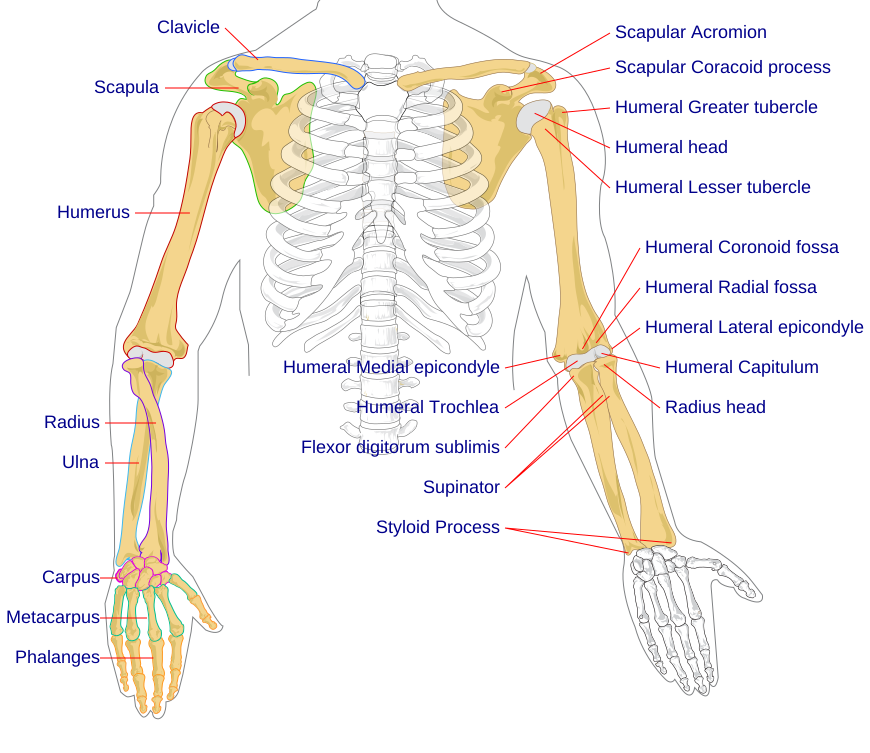
Lateral epicondylitis ("tennis elbow") is a painful overuse tendinopathy of the extensor carpi radialis brevis (ECRB) at its origin on the lateral epicondyle. Despite the name, only 5% of cases occur in tennis players — it is most common in people aged 35–55 who perform repetitive gripping and forearm rotation activities: carpenters, painters, plumbers, and computer workers. The underlying pathology is tendinosis — degenerated, disorganized collagen — not acute inflammation.
Diagnosis
exam first, imaging secondLateral elbow pain at the lateral epicondyle, worsened by resisted wrist extension and gripping (especially with the elbow extended). The Cozen test (resisted wrist extension) and Mill's test reproduce the pain. X-rays are usually normal. Ultrasound and MRI show intratendinous hypoechoic areas and thickening confirming tendinosis.
Treatment Path
how care progresses at OSI1
Activity modification
Reducing the provocative gripping and forearm rotation activities.
2
Counterforce brace
A strap just distal to the lateral epicondyle reduces forces on the tendon origin and provides significant symptom relief.
3
Physical therapy
Eccentric wrist extensor exercises and grip strengthening remodel the tendon and are the most effective long-term treatment.
NSAIDs / topical diclofenac
Short-term anti-inflammatory management.
Corticosteroid injection
Provides rapid short-term pain relief but does not change long-term outcomes and may actually inhibit tendon healing — used sparingly.
PRP injection
Platelet-rich plasma injection into the degenerated tendon — strong evidence supporting PRP over cortisone for long-term outcomes in lateral epicondylitis.
Extracorporeal shock wave therapy (ESWT)
Non-invasive acoustic wave treatment for chronic cases.
Surgical Options at OSI
if non-operative care isn't enoughSurgery is considered for the small minority (< 5%) with persistent, disabling symptoms after 6–12 months of comprehensive non-operative care including PRP and ESWT.
Providers Who Treat Lateral Epicondylitis (tennis Elbow)
sports-medicine team

David B. Templin, M.D.

Trent Twitero, M.D.
Further Reading
authoritative sourcesExternal patient-education references and related OSI pages for additional background: