
Overview
what it is and why it matters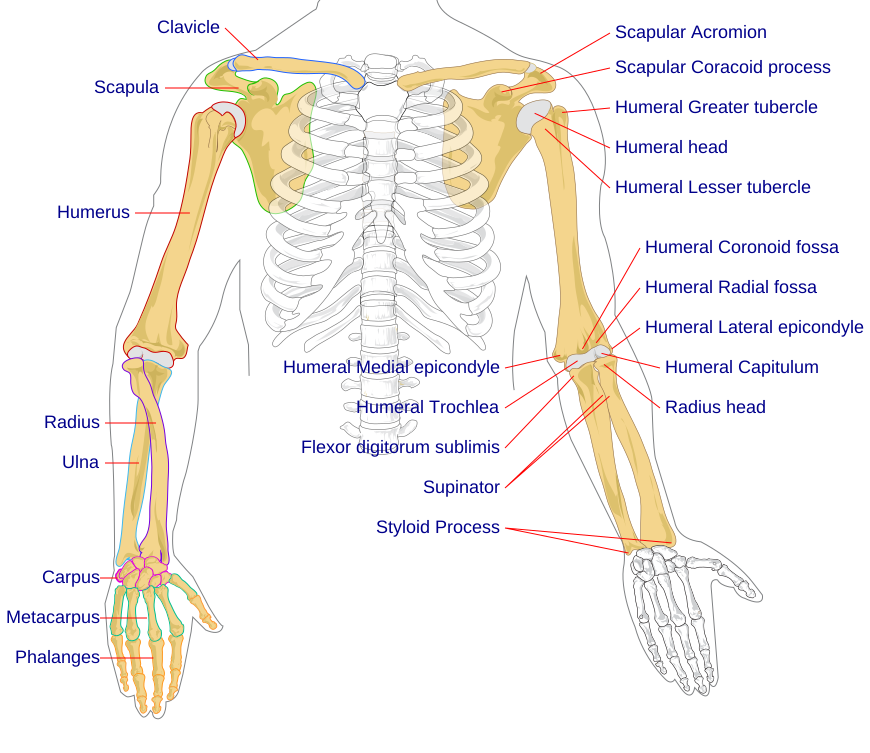
The coronoid process is the bony projection at the front of the proximal ulna. It is the primary anterior buttress preventing posterior elbow dislocation, and is where the anterior capsule and the anterior bundle of the MCL attach. Isolated coronoid fractures are uncommon; they most often occur as part of complex elbow dislocations (terrible triad, Monteggia equivalent) or with radial head fractures. The Regan-Morrey classification describes severity (tips, anteromedial facet, basal).
Diagnosis
exam first, imaging secondElbow pain after trauma, typically in the context of a dislocation injury. X-rays and CT characterize the fracture size and displacement. CT is essential for anteromedial coronoid fractures, which are difficult to visualize on plain X-rays.
Treatment Path
how care progresses at OSI1
Non-operative management
For small tip fractures (Type I) associated with stable elbow dislocations that are stable after reduction.
Surgical Options at OSI
if non-operative care isn't enoughLarger coronoid fractures associated with elbow instability — particularly anteromedial facet fractures and those in the context of terrible triad — require fixation.
Providers Who Treat Coronoid Fracture
sports-medicine team

David B. Templin, M.D.

Trent Twitero, M.D.
Further Reading
authoritative sourcesExternal patient-education references and related OSI pages for additional background: