
Overview
what it is and why it matters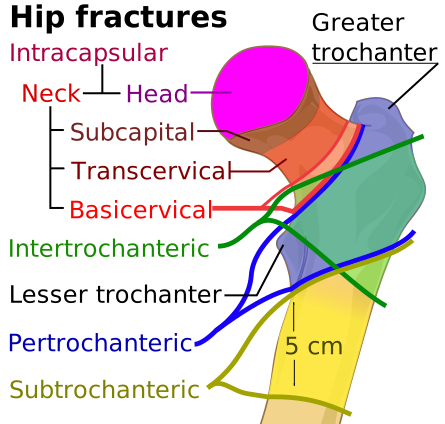
Subtrochanteric fractures occur within the proximal 5 cm of femoral shaft below the lesser trochanter. This region is subject to extreme mechanical forces — high compressive stress medially and high tensile stress laterally — making it one of the most challenging areas of the femur to fix. They occur in two populations: high-energy trauma in younger patients, and low-energy or even atypical fractures in older patients on long-term bisphosphonate therapy.
Diagnosis
exam first, imaging secondUpper thigh pain, inability to bear weight, and thigh swelling. AP pelvis and full-length femur X-rays are mandatory. CT scan helps delineate comminuted fragments. Contralateral femur X-ray is taken to check for bisphosphonate-related stress reaction on the other side.
Treatment Path
how care progresses at OSI1
Non-operative management
Not typically an option — these fractures almost universally require surgical fixation for acceptable healing.
Surgical Options at OSI
if non-operative care isn't enoughNearly all subtrochanteric fractures are treated surgically. The goal is stable fixation that allows early mobilization.
Providers Who Treat Subtrochanteric Fracture
sports-medicine team

David B. Templin, M.D.

Trent Twitero, M.D.
Further Reading
authoritative sourcesExternal patient-education references and related OSI pages for additional background: