
Overview
what it is and why it matters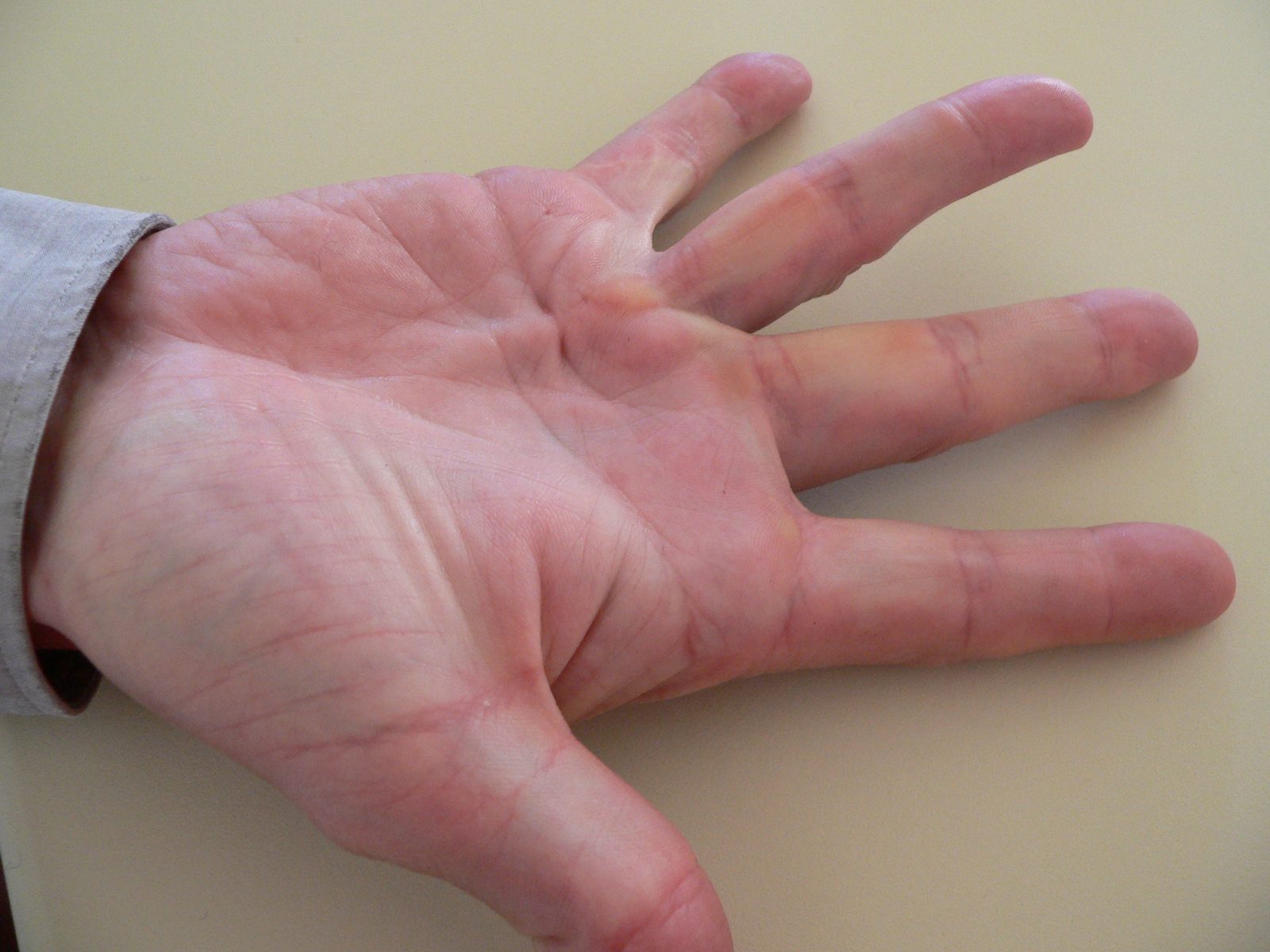
Dupuytren's contracture is a fibroproliferative disorder of the palmar fascia. Normal fibrous tissue in the palm gradually forms nodules, then cords, that contract and pull the fingers — most often the ring and little finger — into a fixed flexion deformity. The cause is not fully understood, but genetics plays a major role; it is especially common in men of Northern European descent over age 50.
The condition is painless in most cases. The main problem is progressive inability to flatten the hand, which interferes with activities like wearing gloves, shaking hands, or reaching into pockets.
Diagnosis
exam first, imaging secondDiagnosis is clinical: nodules and longitudinal cords in the palm or digit, with contracture measured by the tabletop test (inability to lay the palm flat) and goniometry of MCP and PIP joint angles. No imaging is required. The degree of PIP joint contracture influences prognosis after treatment.
Treatment Path
how care progresses at OSI1
Observation
Mild disease without functional limitation is monitored; Dupuytren's does not always progress.
2
Collagenase injection (Xiaflex)
An injectable enzyme that dissolves the collagen cord; the cord is then manually ruptured in the office. FDA-approved, minimally invasive, no surgery required. Best for MCP contractures, less reliable for PIP.
3
Needle aponeurotomy
A needle is used percutaneously to weaken and rupture the cord in the office. Quick recovery, lower cost, higher recurrence than surgery.
Surgical Options at OSI
if non-operative care isn't enoughSurgery is indicated when MCP joint contracture exceeds 30° or any degree of PIP contracture develops — PIP stiffness is harder to reverse the longer it persists.
Providers Who Treat Dupuytren's Contracture
sports-medicine team

David B. Templin, M.D.

Trent Twitero, M.D.
Further Reading
authoritative sourcesExternal patient-education references and related OSI pages for additional background: