
Overview
what it is and why it matters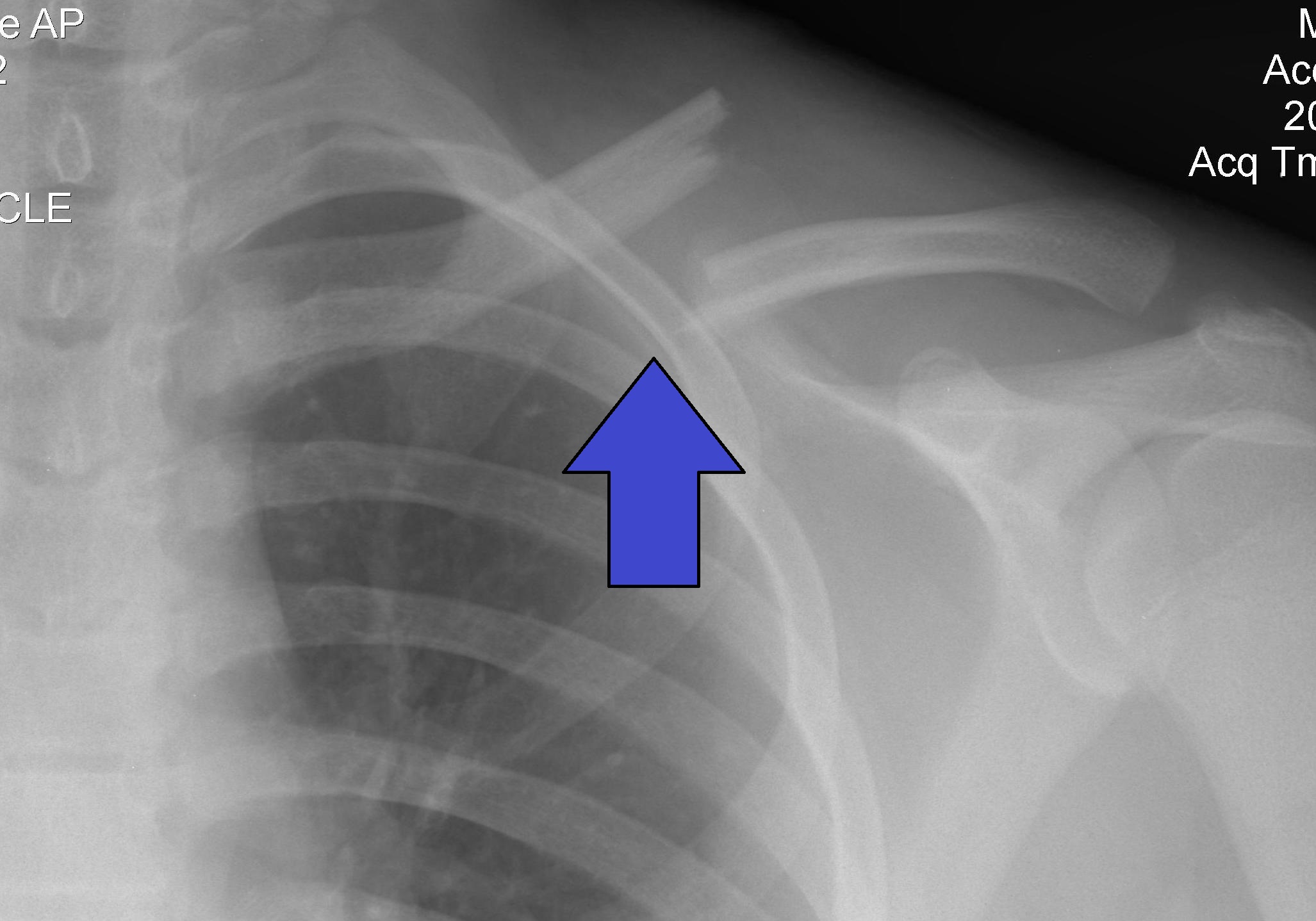
Clavicle fractures account for approximately 5% of all fractures. They are most common in young men and athletes from direct blows to the shoulder or falls on an outstretched arm. The middle third of the clavicle (midshaft) accounts for roughly 80% of fractures; distal-third and medial-third fractures occur less commonly. Most clavicle fractures heal without surgery, but markedly displaced or shortened fractures have an increased risk of malunion and are increasingly treated operatively.
Diagnosis
exam first, imaging secondPain, swelling, and a visible or palpable deformity over the clavicle after trauma. AP shoulder X-ray confirms the fracture. A cephalocaudal ("zanca") view helps evaluate displacement for midshaft fractures. CT is used for distal-third fractures near the AC joint.
Treatment Path
how care progresses at OSI1
Sling immobilization
Standard treatment for most midshaft clavicle fractures — 4–6 weeks in a simple sling with progressive rehabilitation. Heals reliably in the majority of cases.
2
Figure-of-eight brace
An alternative to a sling that may provide slightly better alignment; not clearly superior in outcomes.
Surgical Options at OSI
if non-operative care isn't enoughAbsolute indications include osteomyelitis and septic…">open fractures, skin tenting about to break through, vascular injury, and floating shoulder. Relative indications include shortening > 2 cm, complete displacement with overlap, and highly active patients wanting faster return to sport.
Providers Who Treat Clavicle Fracture
sports-medicine team

David B. Templin, M.D.

Trent Twitero, M.D.
Further Reading
authoritative sourcesExternal patient-education references and related OSI pages for additional background: