
Overview
what it is and why it matters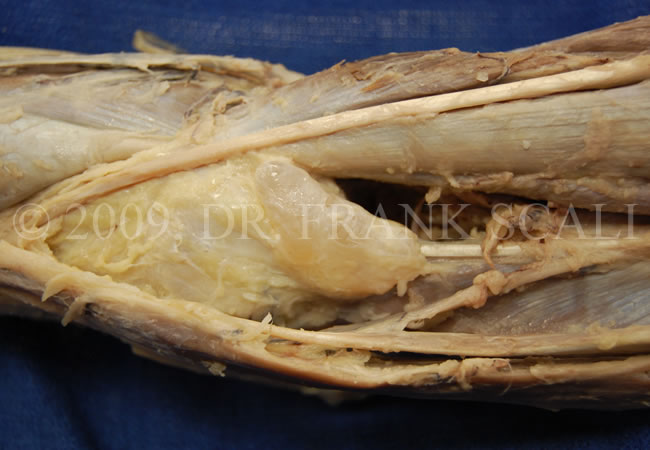
A Baker's cyst (popliteal cyst) is a fluid-filled sac behind the knee that forms when excess joint fluid is pushed into the popliteal fossa through a one-way valve between the joint and the semimembranosus-gastrocnemius bursa. It is almost always a secondary finding — the fluid comes from an intra-articular problem such as a meniscus tear, arthritis, or inflammatory arthropathy. The cyst itself is not the problem; the underlying joint pathology is.
Baker's cysts can rupture, causing sudden calf pain and swelling that can mimic a DVT.
Diagnosis
exam first, imaging secondA soft mass in the popliteal fossa, most prominent with the knee extended. Ultrasound is the most cost-effective study to confirm a cyst and differentiate it from a popliteal artery aneurysm. MRI evaluates the cyst and — more importantly — the intra-articular pathology driving it.
Treatment Path
how care progresses at OSI1
Treatment of the underlying cause
Addressing the intra-articular source (e.g., meniscal repair, anti-inflammatory medication for arthritis) resolves the cyst in most cases.
2
Aspiration
Ultrasound-guided aspiration provides temporary relief but high recurrence without treating the source.
Surgical Options at OSI
if non-operative care isn't enoughDirect excision of the cyst is rarely needed. If the underlying joint pathology is treated arthroscopically and the cyst persists, excision can be performed simultaneously.
Providers Who Treat Baker's Cyst
sports-medicine team

David B. Templin, M.D.

Trent Twitero, M.D.
Further Reading
authoritative sourcesExternal patient-education references and related OSI pages for additional background: