
Overview
what it is and why it matters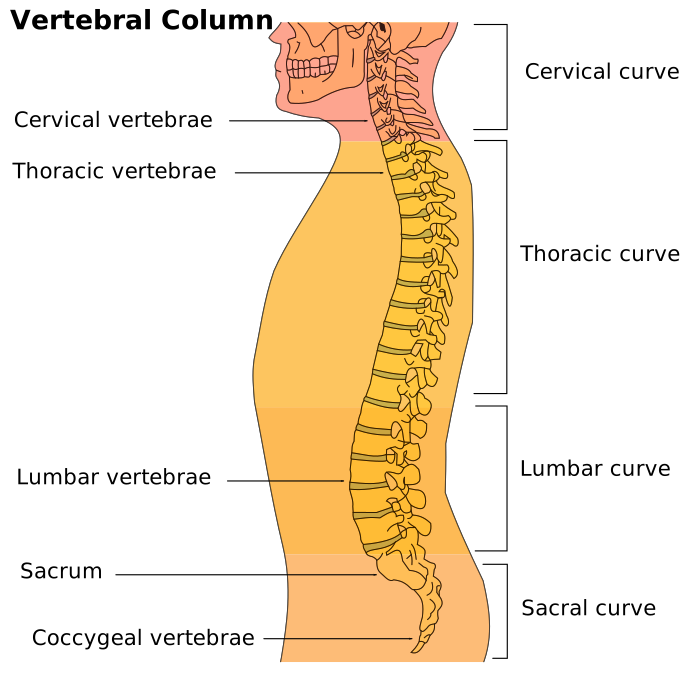
Sciatica describes pain that travels along the path of the sciatic nerve — from the lower back through the buttock and down the leg, often extending to the foot. It is a symptom, not a diagnosis. The most common cause is lumbar disc herniation compressing an L4, L5, or S1 nerve root. Other causes include lumbar stenosis, spondylolisthesis, piriformis syndrome, or (rarely) a tumor or hematoma.
The pain is often described as burning, electric, or shooting, and is typically worse with sitting, bending, and coughing. Most cases resolve without surgery.
Diagnosis
exam first, imaging secondA positive straight leg raise test (pain reproduced between 30–70° of elevation) is sensitive for disc herniation causing L5 or S1 radiculopathy. MRI is the definitive imaging test. EMG/NCS can confirm the level of compression and assess prognosis.
Treatment Path
how care progresses at OSIActivity modification
Avoiding prolonged sitting; walking is usually better tolerated.
Physical therapy
Neural mobilization (nerve flossing), McKenzie exercises, and core stabilization.
NSAIDs / oral corticosteroids
Reduce nerve root inflammation.
Lumbar epidural steroid injection
Transforaminal ESI at the affected level is the most effective non-surgical intervention for acute sciatica from disc herniation — 70-80% respond.
If Surgery Is Truly Needed
rare for most patientsSurgery helps only a small minority of spine patients — usually those with a specific structural problem plus a nerve issue that isn’t getting better with a structured non-operative trial. When that step is genuinely warranted, OSI coordinates it the same way we coordinate every other part of your care: imaging, records, and the handoff are handled for you, so no part of the process falls on your shoulders.
Emergency. Bilateral leg weakness, saddle numbness, or loss of bladder or bowel control is a surgical emergency — go to the nearest emergency department rather than waiting for a clinic appointment.
Further Reading
authoritative sourcesExternal patient-education references and related OSI pages for additional background: