
Overview
what it is and why it matters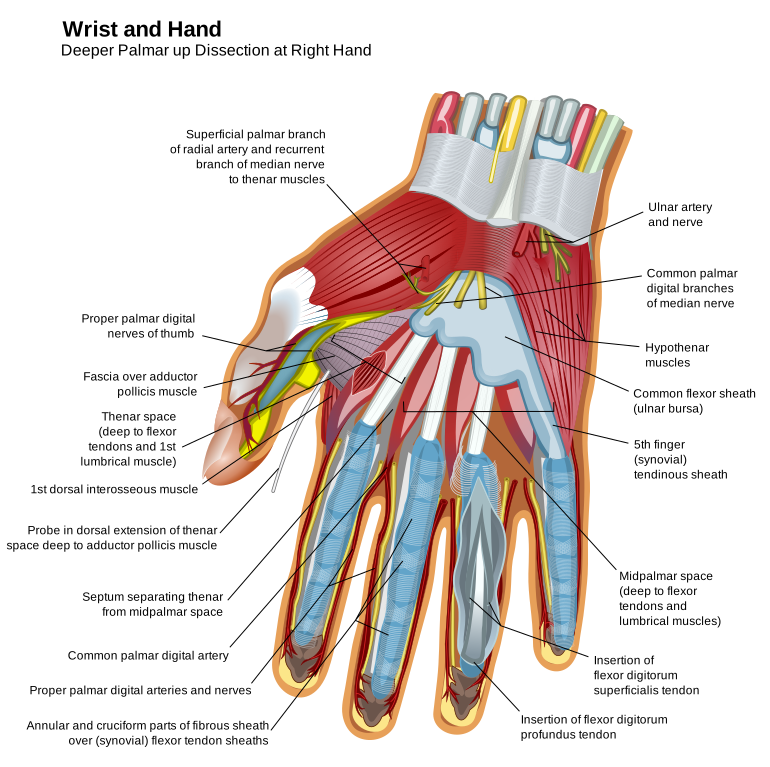
Trigger finger (stenosing tenosynovitis) occurs when the A1 pulley — the first fibrous sheath the flexor tendons pass through at the base of the finger — becomes thickened and narrowed. The tendon catches or locks under the pulley, causing the finger to snap, click, or lock in flexion. In severe cases the finger cannot be straightened without passive manipulation.
The ring finger and thumb are most commonly affected. Risk factors include diabetes, rheumatoid arthritis, and repetitive gripping. It can occur at any age but is most common in women over 40.
Diagnosis
exam first, imaging secondDiagnosis is entirely clinical: tenderness at the A1 pulley (at the distal palmar crease for most fingers, at the thumb MCP joint), palpable nodule on the tendon, and triggering or locking with active finger flexion. No imaging is required in typical presentations. Ultrasound can confirm tendon nodule size and guide injection.
Treatment Path
how care progresses at OSI1
Corticosteroid injection
Injection alongside the tendon at the A1 pulley is highly effective — resolution rates of 60–90% in mild-to-moderate cases, with most patients responding to one or two injections.
2
Splinting
MCP extension splinting rests the tendon and can resolve mild triggering, particularly useful in the acute phase.
3
Activity modification
Reducing gripping activities during the acute phase.
Surgical Options at OSI
if non-operative care isn't enoughSurgery is recommended after failed injection(s), in locked trigger fingers, or in patients with diabetes (where injections are less effective and carry blood sugar risk).
Providers Who Treat Trigger Finger
sports-medicine team

David B. Templin, M.D.

Trent Twitero, M.D.
Further Reading
authoritative sourcesExternal patient-education references and related OSI pages for additional background: