
Overview
what it is and why it matters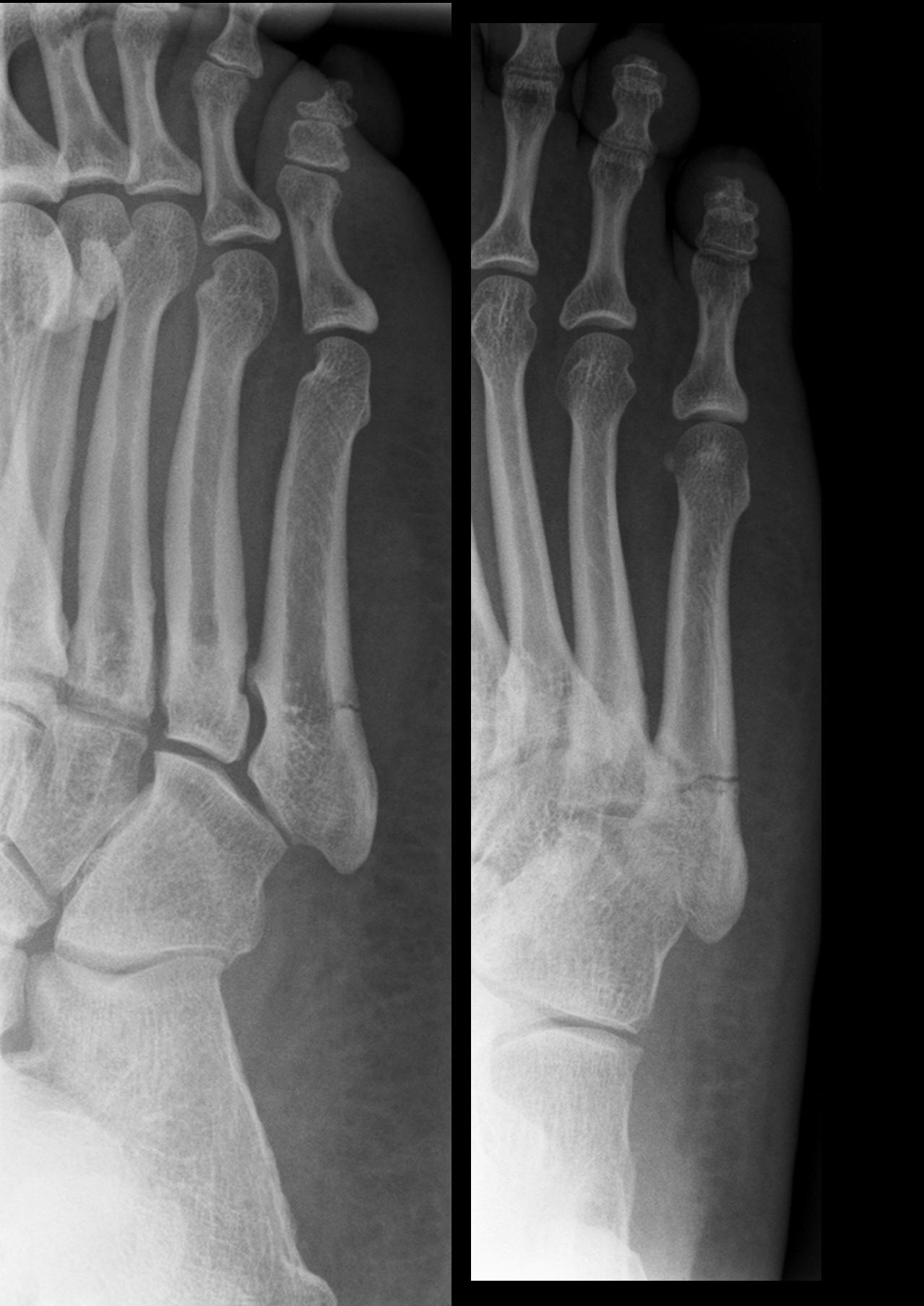
Fifth metatarsal fractures are among the most common foot fractures. The proximal fifth metatarsal has three zones with different biology and prognosis: Zone 1 is the tuberosity avulsion (lowest risk — the most common "sprained ankle" fracture, heals readily); Zone 2 is the true Jones fracture at the metaphyseal-diaphyseal junction — a high-risk area with poor vascularity, high nonunion rate, and risk of refracture; Zone 3 is a proximal diaphyseal stress fracture (highest risk for nonunion in athletes).
Diagnosis
exam first, imaging secondLateral foot X-ray. Accurate zone classification is critical for management. MRI or bone scan can detect stress fractures invisible on X-ray. CT assesses cortical hypertrophy and intramedullary changes in chronic fractures.
Treatment Path
how care progresses at OSINWB cast (Zone 2 conservative)
Non-operative management for true Jones fractures: NWB in a short-leg cast for 6–8 weeks. High nonunion risk (up to 25%) with conservative management.
Walking boot (Zone 1 avulsion)
Most avulsion fractures heal well in a boot with weight-bearing as tolerated in 4–6 weeks.
Surgical Options at OSI
if non-operative care isn't enoughAthletes with Zone 2 Jones fractures, any Zone 3 stress fracture, and all fractures with existing nonunion or cortical hypertrophy benefit from surgical fixation.
Further Reading
authoritative sourcesExternal patient-education references and related OSI pages for additional background: