
Overview
what it is and why it matters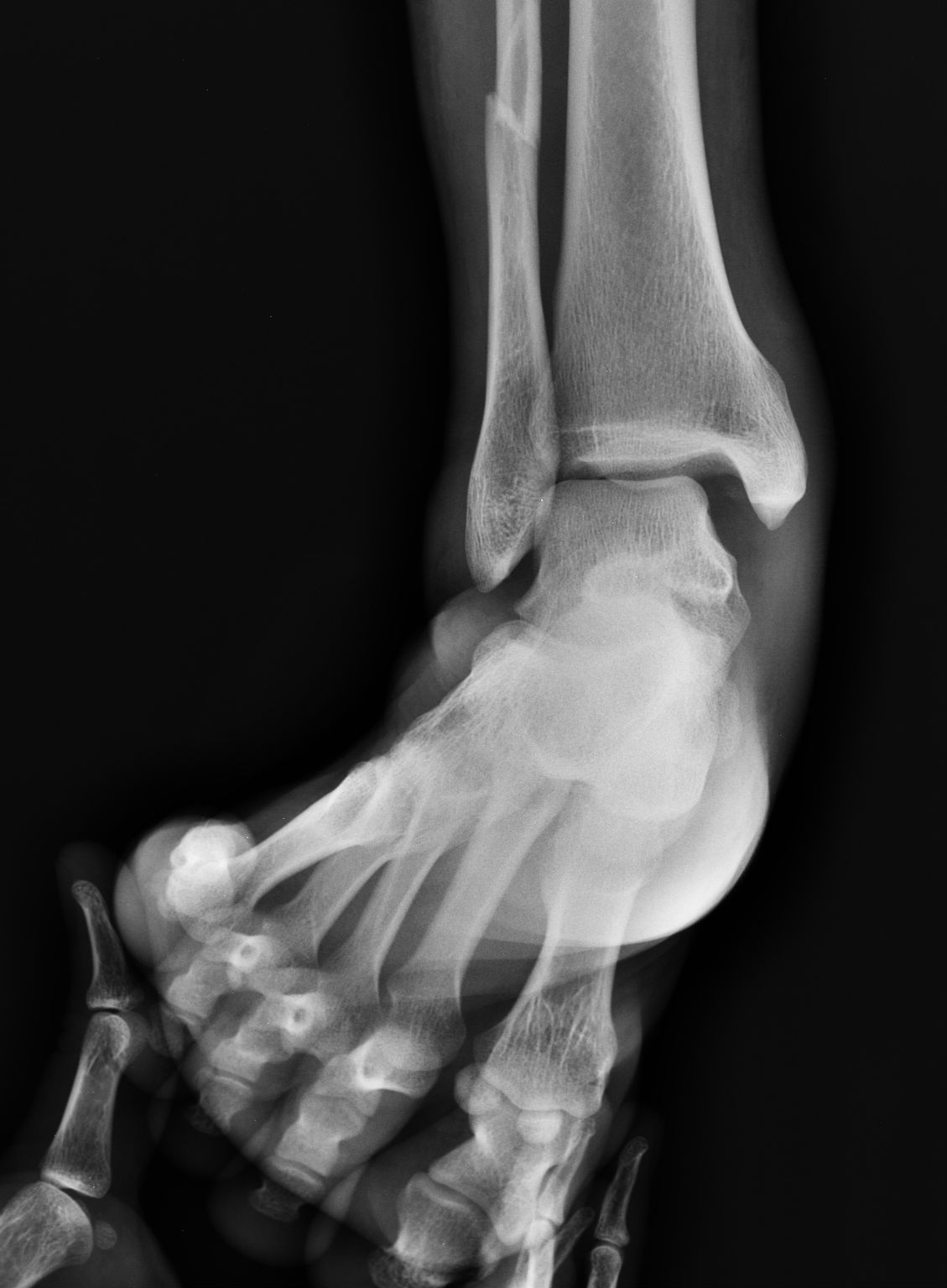
A high ankle sprain is an injury to the syndesmotic ligaments that bind the distal tibia and fibula together above the ankle joint — distinct from the far more common lateral ankle sprain which injures the ligaments below the joint. The syndesmosis is stressed by external rotation and forced dorsiflexion. High ankle sprains take significantly longer to heal than lateral sprains (months vs. weeks) and are more likely to require surgery in unstable cases.
They are common in American football, rugby, and ice hockey. Associated fibula fractures (Maisonneuve) must always be excluded.
Diagnosis
exam first, imaging secondTenderness above the ankle at the syndesmosis, the squeeze test (compressing tibia and fibula at mid-calf reproduces ankle pain), and the external rotation stress test. Mortise X-ray assesses tibiofibular clear space widening. Standing bilateral ankle X-rays help identify subtle instability. MRI and CT confirm ligament injury and widening. The entire fibula must be X-rayed to exclude Maisonneuve fracture.
Treatment Path
how care progresses at OSINon-weight-bearing cast
Stable injuries are managed with a period of NWB immobilization (4–6 weeks) followed by progressive rehabilitation.
Physical therapy
Progressive weight-bearing, peroneal strengthening, and proprioceptive training.
Surgical Options at OSI
if non-operative care isn't enoughAny tibiofibular widening (diastasis) requires surgical stabilization to restore mortise congruity.
Further Reading
authoritative sourcesExternal patient-education references and related OSI pages for additional background: