
Overview
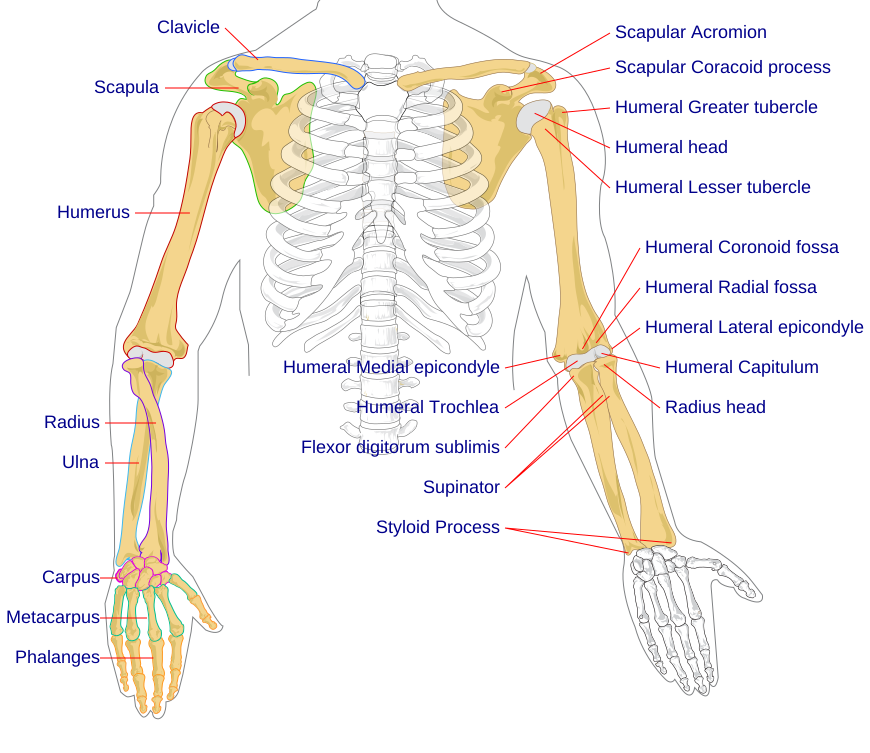
The olecranon is the bony point of the elbow where the triceps tendon inserts. A fracture here disconnects the extension mechanism of the arm, so the patient cannot actively straighten the elbow against gravity. The fragment is usually pulled apart by the triceps.
Non-operative treatment is reserved for non-displaced fractures in low-demand patients. Displaced fractures almost always need surgery to restore the extension mechanism and the articular surface of the elbow.
Why it's done
Olecranon ORIF is typically considered when imaging and the clinical picture together indicate that the fracture will not reliably heal or function without surgical stabilization. Common indications include:
Displaced fracture with loss of extension
Triceps pull will widen the fracture over time.
Intra-articular step-off
The greater sigmoid notch is a weight-bearing joint surface.
Comminution or oblique fracture pattern
Plate fixation is typically needed.
Open fracture
Urgent debridement and fixation.
How it works
Simple transverse fractures are often treated with a tension-band construct using two parallel pins and a figure-of-eight stainless-steel wire. The tension band converts triceps pull into compression across the fracture.
Comminuted or oblique patterns are typically treated with a contoured olecranon plate and screws applied through a posterior incision. Fluoroscopy confirms reduction and implant position.
Recovery
The elbow is briefly splinted and then started on gentle range-of-motion exercises, usually within the first week. Active extension against resistance is avoided for about six weeks to protect the repair. Strengthening and return to full activity follow at around three months. Hardware irritation is common at the olecranon and many patients elect to have implants removed once the fracture is healed.
Contact
For questions about this procedure or to schedule an evaluation, call the office at (830) 625-0009 or request an appointment online.
Further Reading
External patient-education references and related OSI pages for additional background: