
Overview
what it is and why it matters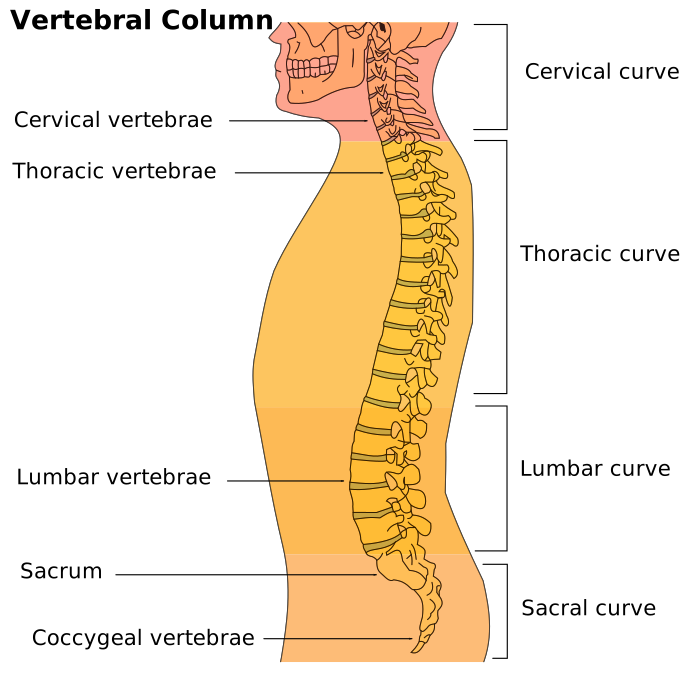
Whiplash is a soft-tissue injury to the cervical spine caused by rapid acceleration-deceleration forces — typically from a sports impact or fall. The sudden hyperextension followed by flexion (or vice versa) strains the muscles, ligaments, facet joint capsules, and in some cases the intervertebral discs.
Symptoms include neck pain and stiffness, headache originating at the base of the skull, shoulder pain, and sometimes arm pain if nerve roots are involved. Most patients recover within weeks to months; a subset develops chronic pain.
Diagnosis
exam first, imaging secondThe Canadian C-Spine Rule and NEXUS criteria guide imaging decisions after trauma. X-rays (including flexion-extension views) assess alignment and instability. MRI is ordered for neurologic symptoms, ligamentous injury concern, or persistent symptoms beyond 4–6 weeks. The Quebec Task Force grading (I–IV) stratifies injury severity.
Treatment Path
how care progresses at OSIEarly mobilization
Contrary to older practice, soft collars are discouraged; early active range-of-motion is the standard of care.
Physical therapy
Manual therapy, strengthening, and proprioceptive retraining improve outcomes in grade II-III injury.
NSAIDs / muscle relaxants
Short-term pain management for the acute phase.
Cervical facet medial branch blocks / radiofrequency ablation
For persistent facet-mediated pain, diagnostic blocks followed by RF ablation of the medial branch nerves provide durable relief.
If Surgery Is Truly Needed
rare for most patientsSurgery helps only a small minority of spine patients — usually those with a specific structural problem plus a nerve issue that isn’t getting better with a structured non-operative trial. When that step is genuinely warranted, OSI coordinates it the same way we coordinate every other part of your care: imaging, records, and the handoff are handled for you, so no part of the process falls on your shoulders.
Further Reading
authoritative sourcesExternal patient-education references and related OSI pages for additional background: