
Overview
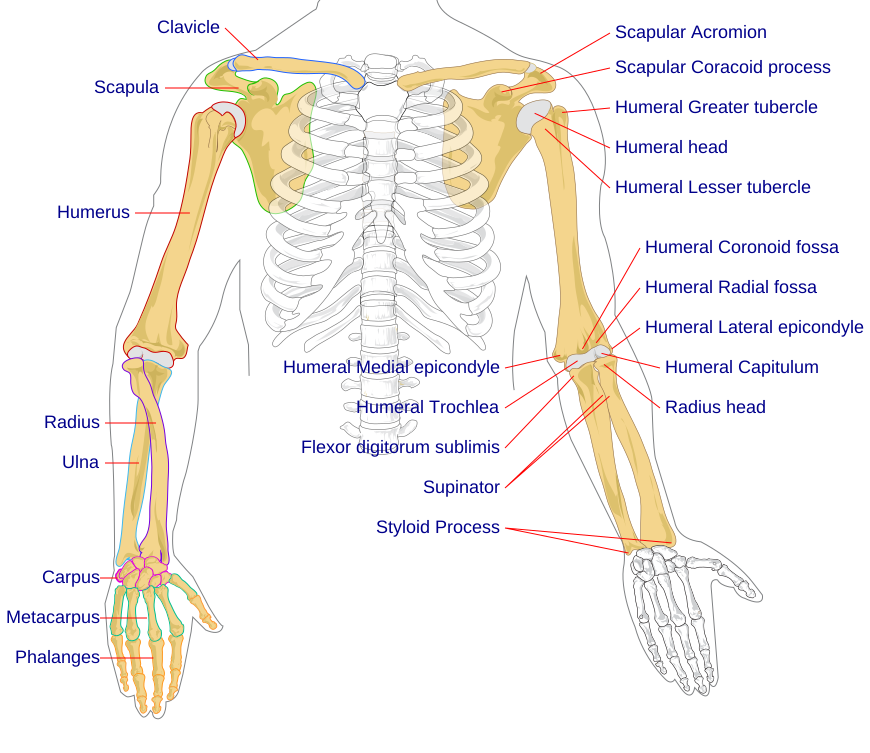
The coronoid is a small bony ridge on the front of the ulna that buttresses the elbow against posterior dislocation. Even a small coronoid fragment can cause recurrent instability if it goes unfixed, especially in the setting of a terrible-triad injury (elbow dislocation with radial head and coronoid fractures).
Fixation is considered when the coronoid fragment is large enough to secure, when the elbow is unstable after reduction, or when concurrent injuries of the radial head and collateral ligaments are being addressed.
Why it's done
Coronoid fixation is typically considered when imaging and the clinical picture together indicate that the fracture will not reliably heal or function without surgical stabilization. Common indications include:
Elbow instability after reduction
A coronoid deficiency often leaves the elbow prone to re-dislocation.
Terrible-triad injury
Coronoid fixation is part of the standard reconstruction.
Large anteromedial facet fracture
These fragments support the medial collateral ligament and varus stability.
Basal or body fractures
Larger fragments are amenable to screw or plate fixation.
How it works
Access is through a medial, lateral, or combined approach depending on the injury pattern. Small-fragment screws or a buttress plate are used for larger pieces. Smaller fragments or comminuted pieces are captured with transosseous sutures passed through drill holes in the ulna.
Associated radial head and collateral ligament injuries are addressed in the same operation. Intra-operative fluoroscopy and stress testing confirm that the elbow is stable through a full arc of motion.
Recovery
The elbow is splinted briefly and then started on protected range of motion, often in a hinged elbow brace. Early motion within a safe arc is a priority to prevent stiffness. Strengthening begins around six weeks. Full recovery typically takes three to six months. Residual stiffness and heterotopic ossification are known risks; hardware is left unless symptomatic.
Contact
For questions about this procedure or to schedule an evaluation, call the office at (830) 625-0009 or request an appointment online.
Further Reading
External patient-education references and related OSI pages for additional background: