
Overview
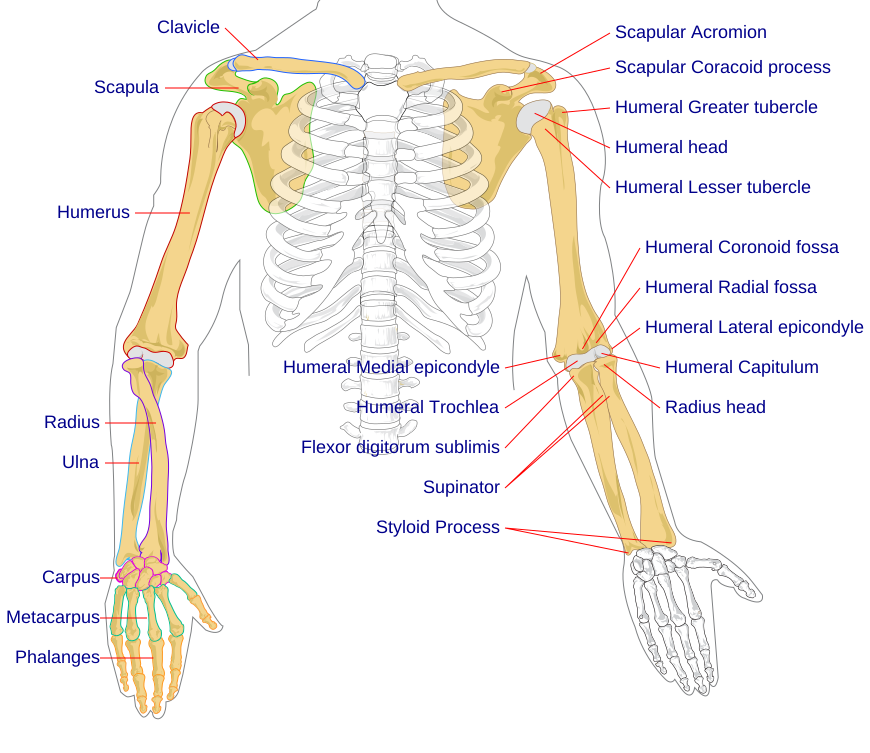
The distal biceps attaches to the radial tuberosity and is the primary supinator of the forearm as well as a powerful elbow flexor. Rupture — typically from a sudden eccentric load — produces weakness of supination more than flexion, retraction of the muscle, and a characteristic 'Popeye' deformity. Early repair prevents the tendon from scarring in a retracted position.
How the Procedure Works
We retrieve the retracted tendon through an anterior incision at the elbow crease, then expose the radial tuberosity through the interval between the brachioradialis and the pronator teres — this protects both the lateral antebrachial cutaneous nerve superficially and the posterior interosseous nerve, which wraps around the radial neck just centimeters from where we're working. The tuberosity is prepared to bleeding bone on its ulnar (deep) face, which is the anatomic footprint; placing the tendon here restores the supination moment arm more faithfully than a more anterior position. We secure the tendon with a cortical button passed through a unicortical tunnel, an interference screw, or both depending on tissue quality and tunnel geometry. Repair within two to three weeks of rupture, before significant retraction and scarring, gives the best strength outcomes.
When to Consider Distal Biceps Repair
Distal biceps repair is generally offered when symptoms, imaging, and a trial of non-operative care together point to surgery as the next step. The typical picture includes:
Acute distal biceps rupture
A sudden tear, with bruising in the antecubital fossa and loss of the normal distal biceps contour.
Strength-dependent lifestyle
Loss of supination strength that meaningfully affects the patient's work or recreational activity.
Conditions This Treats
Physicians Who Perform Distal Biceps Repair


David B. Templin, M.D.

Trent Twitero, M.D.
Providers Who Surgically Assist with Distal Biceps Repair

Sydney Georg, PA-C

Ben Swanner, PA-C
Further Reading
External patient-education references and related OSI pages for additional background: