
Overview
what it is and why it matters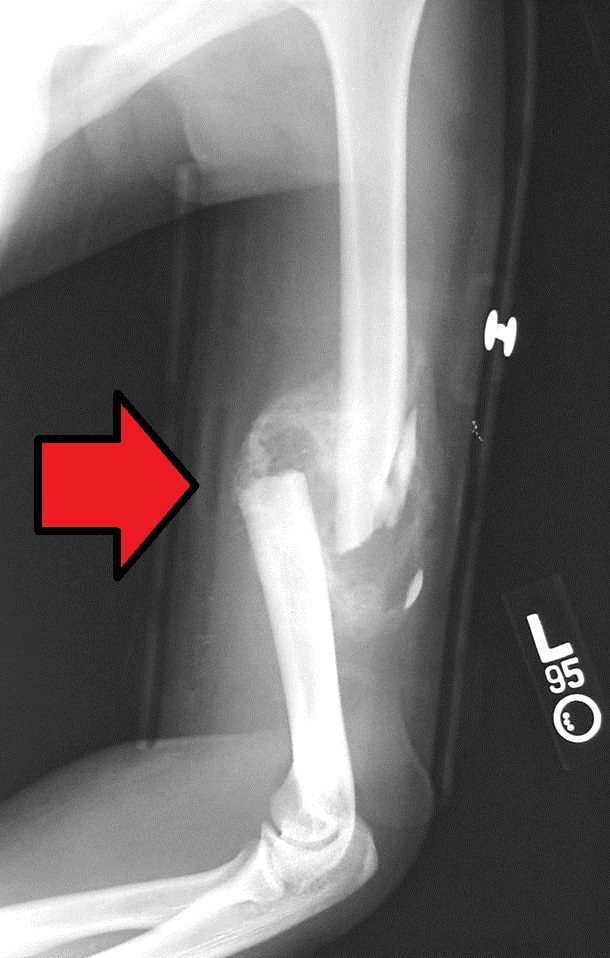
Humeral shaft fractures (diaphyseal humerus fractures) occur from direct blows, falls, or rotational forces. They are notable for their proximity to the radial nerve, which wraps around the humeral shaft in the spiral groove — radial nerve palsy (wrist and finger drop) occurs in 10–15% of humeral shaft fractures and is usually a neurapraxia that recovers spontaneously in 3–4 months. Most humeral shaft fractures heal successfully with functional bracing.
Diagnosis
exam first, imaging secondUpper arm pain, swelling, deformity, and crepitus. Thorough neurological examination of radial, median, and ulnar nerve function is mandatory. AP and lateral humerus X-rays. CT may be used for periprosthetic or pathologic fractures.
Treatment Path
how care progresses at OSI1
Functional humeral brace (Sarmiento)
After initial coaptation splinting, a custom functional brace allows early elbow and shoulder motion while the fracture heals. Achieves union in over 90% of cases.
Surgical Options at OSI
if non-operative care isn't enoughosteomyelitis and septic…">Open fractures, vascular injury, floating elbow (concurrent forearm fracture), failure to maintain alignment in a brace, and periprosthetic fractures are surgical indications.
Providers Who Treat Humeral Shaft Fracture
sports-medicine team

David B. Templin, M.D.

Trent Twitero, M.D.
Further Reading
authoritative sourcesExternal patient-education references and related OSI pages for additional background: