
Overview
what it is and why it matters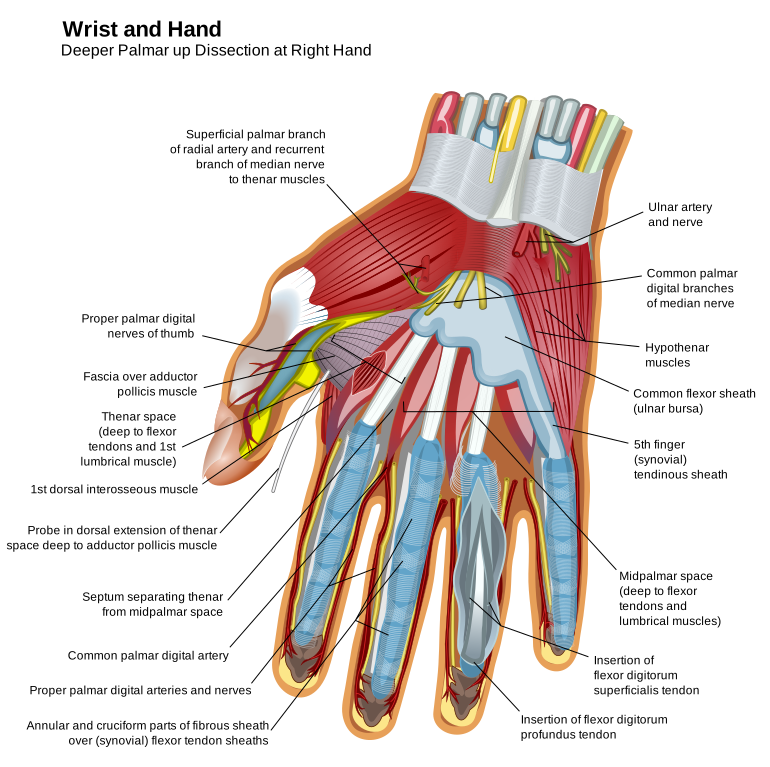
Carpal tunnel syndrome (CTS) is a compressive neuropathy of the median nerve as it passes through the carpal tunnel at the wrist. It is the most common entrapment neuropathy in the upper extremity, with an estimated lifetime prevalence of 3–4%. Women are affected two to three times more often than men, and incidence rises with age (AAOS OrthoInfo; JAAOS 2019;27:e281–e290).
Most cases are idiopathic. Contributing factors include obesity, pregnancy, diabetes, hypothyroidism, inflammatory arthritis, prior wrist fracture, and occupations or hobbies that involve sustained gripping or vibration. The hallmark symptoms are numbness and tingling in the thumb, index, long, and radial half of the ring finger — worse at night and with repetitive hand use.
Anatomy & Mechanism
a confined spaceThe carpal tunnel is a fibro-osseous canal at the base of the palm, bounded by the carpal bones (floor and walls) and the transverse carpal ligament (roof). Nine flexor tendons and the median nerve share this narrow space. Any process that raises pressure inside the tunnel — synovial hypertrophy, edema, a space-occupying lesion, or wrist posture that reduces tunnel volume — can compress the nerve. Chronic compression causes segmental demyelination initially, and axonal loss later. This progression explains why mild CTS often resolves with conservative care, while advanced CTS with thenar atrophy recovers less completely even after successful decompression.
Symptoms
what patients describe- Numbness and tingling in the thumb, index, long, and radial half of the ring finger
- Night symptoms that wake patients and are relieved by shaking the hand (the "flick sign")
- Paresthesia with driving, holding a phone, or reading — positions that hold the wrist flexed or extended
- Clumsiness with fine motor tasks; dropping small objects
- Weakness of thumb abduction and opposition and visible thenar atrophy in advanced disease
Diagnosis
exam plus electrodiagnostics when neededThe diagnosis is primarily clinical. Provocative maneuvers — Phalen's test (sustained wrist flexion), Tinel's sign (percussion over the median nerve), and the carpal compression test — reproduce symptoms. Two-point discrimination and thenar muscle strength are assessed at every visit to establish severity.
Electrodiagnostic studies (nerve conduction studies and electromyography) confirm the diagnosis, grade severity, and exclude competing diagnoses such as cervical radiculopathy or a more proximal median neuropathy. They are obtained when the diagnosis is uncertain, when surgery is being considered, or when medicolegal documentation is required. Ultrasound can document median nerve swelling at the tunnel inlet and is useful in selected cases.
Nonoperative Treatment
most mild-to-moderate cases respondNonoperative care is first-line for mild and moderate CTS without thenar atrophy. A Cochrane review showed splinting, corticosteroid injection, and oral steroids each provide short-term symptom relief; splinting and injection combined have the strongest short-term evidence (Page et al., Cochrane Database Syst Rev 2012).
1
Night-time wrist splint
A neutral-wrist splint worn at night prevents the sustained wrist flexion that drives nocturnal symptoms. Many patients see meaningful improvement after a short, consistent trial.
2
Activity and ergonomic modification
Adjusting keyboard and mouse position, taking micro-breaks, and avoiding sustained wrist-flexed postures reduces symptom frequency.
3
Corticosteroid injection
A single ultrasound-guided injection of corticosteroid into the carpal tunnel provides durable relief in about one-third of patients and meaningful short-term relief in most. Response to injection is also diagnostic: strong response predicts a good surgical outcome if symptoms later recur.
Operative Treatment
reliable relief for recalcitrant or severe casesCarpal tunnel release is considered for patients with severe carpal tunnel syndrome at presentation (thenar atrophy, constant numbness, or advanced electrodiagnostic findings), for those who have failed a well-conducted nonoperative trial, and for those who experience rapid symptom recurrence after corticosteroid injection. Release reliably relieves paresthesia and night symptoms; recovery of strength and sensation in advanced disease is less predictable and depends on preoperative nerve health.
Recovery & Expectations
what to expect after releaseRecovery after carpal tunnel release is usually straightforward. Night symptoms and tingling typically improve first, often within days of the procedure. Dressing changes and suture removal are handled at a brief follow-up, and most patients resume light hand use soon after. A deep ache at the base of the palm — “pillar pain” — is common for a period and gradually resolves. Grip strength returns more slowly and continues to improve as the hand is used normally.
Recovery of sensation and thumb strength tracks the severity of the nerve compression before surgery. Patients with long-standing, advanced disease and visible thenar atrophy may have residual deficits even after successful release. Your OSI provider advances activity based on the hand’s response, not a fixed calendar.
When to Contact Us
making the callCall (830) 625-0009
Schedule an evaluation for hand numbness or tingling that wakes you at night, persists through the day, or interferes with work or hobbies. Call sooner for sudden severe hand pain after an injury, visible muscle wasting at the base of the thumb, or loss of thumb strength.
Providers Who Treat Carpal Tunnel Syndrome
hand & upper-extremity team

David B. Templin, M.D.

Trent Twitero, M.D.
Further Reading
authoritative sourcesExternal patient-education references and related OSI pages for additional background: