
Overview
what it is and why it matters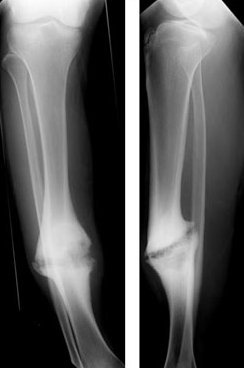
A non-union is a fracture that has failed to heal — typically defined as no radiographic progression at 9 months or at least 3 months past a point when the fracture should have healed. Non-unions are classified as hypertrophic (adequate biology, inadequate stability), atrophic (inadequate biology and stability), or infected. A mal-union is a fracture that has healed in unacceptable alignment — shortening, angulation, or rotation causing functional impairment, abnormal gait, or accelerated joint wear.
Diagnosis
exam first, imaging secondSerial X-rays track fracture healing. CT scan is the most sensitive test for non-union, showing the absence of bridging bone and the fracture gap character. Labs (CBC, ESR, CRP, bone metabolism markers) evaluate for infection and metabolic causes of impaired healing. Nuclear medicine bone scan (three-phase) assesses biologic activity at the non-union site.
Treatment Path
how care progresses at OSIBone stimulator (low-intensity pulsed ultrasound / LIPUS)
FDA-cleared adjunct for non-unions and delayed unions that have not progressed; evidence strongest for distal radius and tibial non-unions.
Surgical Options at OSI
if non-operative care isn't enoughMost established non-unions and symptomatic mal-unions require surgical treatment.
Further Reading
authoritative sourcesExternal patient-education references and related OSI pages for additional background: