
Overview
what it is and why it matters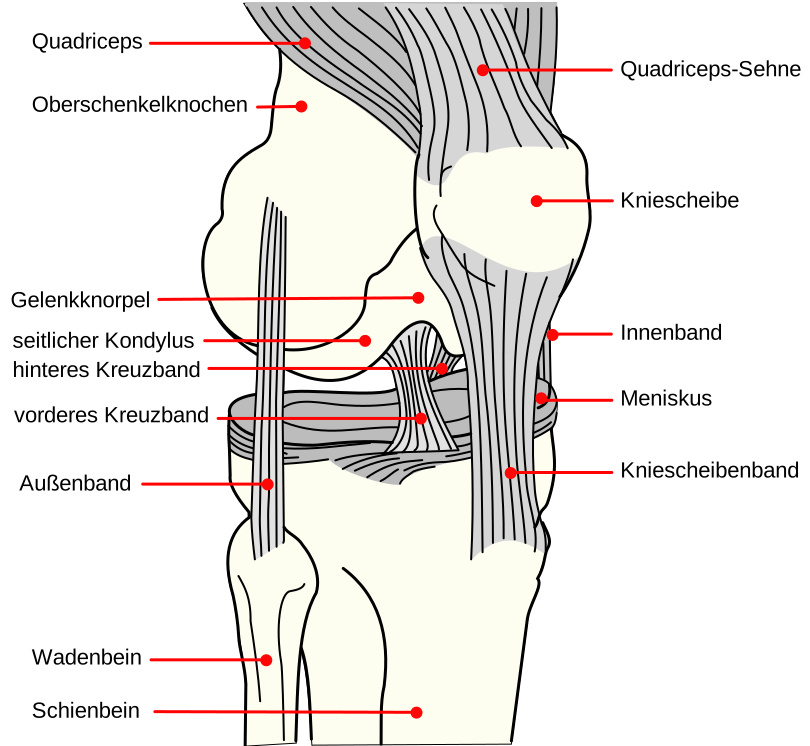
The posterior cruciate ligament (PCL) is the strongest ligament in the knee, running inside the joint from the posterior tibia to the medial femoral condyle, preventing the tibia from sliding backward. PCL tears most commonly occur from a direct blow to the front of the flexed knee or from a fall on the knee with the foot plantarflexed. PCL tears are less common than ACL tears and are more often isolated.
Isolated PCL tears often have a better prognosis than ACL tears — many patients with isolated grade I–II PCL tears regain full function with rehabilitation alone. Combined ligament injuries are more disabling.
Diagnosis
exam first, imaging secondPosterior knee pain and swelling after a direct blow. The posterior drawer test — pressing the tibia backward on the femur with the knee at 90° — shows increased posterior translation. The "posterior sag sign" (tibia drops posteriorly relative to femur when lying supine) may be visible. MRI confirms the tear and evaluates associated injuries.
Treatment Path
how care progresses at OSI1
Bracing
PCL brace reducing posterior tibial sag during rehabilitation.
2
Physical therapy
Quadriceps strengthening — especially during open-chain extension — is the primary rehabilitation strategy, as strong quads compensate for PCL laxity.
3
Activity modification
Many patients with isolated grade I–II PCL tears return to sport with rehabilitation alone.
Surgical Options at OSI
if non-operative care isn't enoughGrade III PCL tears, combined ligament injuries (posterolateral corner, ACL), and cases with persistent functional instability after rehabilitation are considered for surgical reconstruction.
Primary procedure
PCL reconstruction
Graft-based reconstruction through transtibial or tibial inlay technique; often performed in combination with posterolateral corner or other ligament reconstruction in combined injuries.
Learn about this procedure →Additional option
Multi-ligament knee reconstruction
Complex reconstruction for knee dislocations and combined ligament injuries.
Learn about this procedure →Providers Who Treat Pcl Tear
sports-medicine team

David B. Templin, M.D.

Trent Twitero, M.D.
Further Reading
authoritative sourcesExternal patient-education references and related OSI pages for additional background: