
Overview

The rotator cuff is a sleeve of four tendons — supraspinatus, infraspinatus, teres minor, and subscapularis — that wrap around the shoulder and keep the humeral head centered in the socket through motion. When a tendon tears off its attachment, the deltoid loses its counter-balance and the head rides up, producing weakness, impingement, and pain that worsens with overhead activity.
How the Procedure Works
A rotator cuff repair is an arthroscopic reconstruction, not a simple stitching. The steps below describe how the torn tendon is re-anchored to its bony footprint so the construct heals flat, tensionless, and durable.
Arthroscopic setup and diagnostic survey
The shoulder is entered through three or four small portals, typically posterior, lateral, and anterior. Before touching the cuff we survey the glenohumeral joint and the subacromial space, confirming the tear pattern, assessing tendon quality, and looking for concurrent biceps tendon, labral, or AC joint pathology that should be addressed in the same anesthetic. The subscapularis and deltoid are mobilized around, never cut.
Tear characterization and tendon mobilization
The torn edge of the supraspinatus or infraspinatus is grasped and tested for excursion. Adhesions along the bursal and articular sides are released until the tendon reaches its native footprint on the greater tuberosity with the arm at the side — not pulled across with the arm abducted. A repair that only closes under tension will not heal.
Footprint preparation
The bony footprint on the greater tuberosity is debrided of residual soft tissue and gently decorticated to bleeding bone. This biological step matters as much as the mechanical one: a repair onto dry cortex heals unreliably, whereas a vascular footprint gives the tendon a surface it can incorporate into.
Anchor placement and suture passage
Suture anchors are placed in a configuration chosen for the tear. Smaller, crescent-shaped tears close reliably with a single medial row; wider tears benefit from a double-row transosseous-equivalent construct, with medial anchors at the articular margin and lateral anchors at the tuberosity edge that compress the tendon along its full width. Sutures are passed through healthy tendon substance, well back from the frayed edge.
Tensioning and final fixation
The sutures are tensioned and tied — or locked into lateral anchors — so the tendon sits flat on its footprint without bunching or gapping. The final construct is tested through gentle range of motion to confirm it stays reduced. Concomitant procedures, such as a biceps tenodesis or subacromial decompression, are completed before closure if indicated.
When to Consider Rotator Cuff Repair
Rotator cuff repair is generally offered when symptoms, imaging, and a trial of non-operative care together point to surgery as the next step. The typical picture includes:
Symptomatic full-thickness tear
A complete tear with weakness or pain limiting daily or work activity.
High-grade partial tear
A partial tear that has not healed after a course of therapy and injection.
Failure of non-operative care
Structured physical therapy and a subacromial corticosteroid injection have not relieved symptoms.
Conditions This Treats
Physicians Who Perform Rotator Cuff Repair
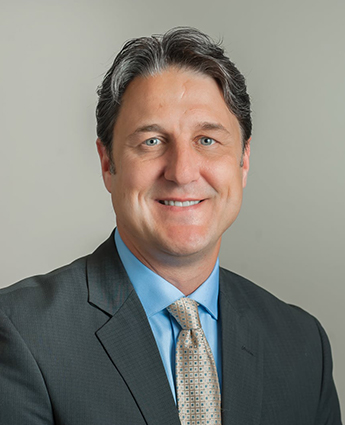

David B. Templin, M.D.

Trent Twitero, M.D.
Providers Who Surgically Assist with Rotator Cuff Repair

Sydney Georg, PA-C

Ben Swanner, PA-C
Further Reading
External patient-education references and related OSI pages for additional background: