
Overview
what it is and why it matters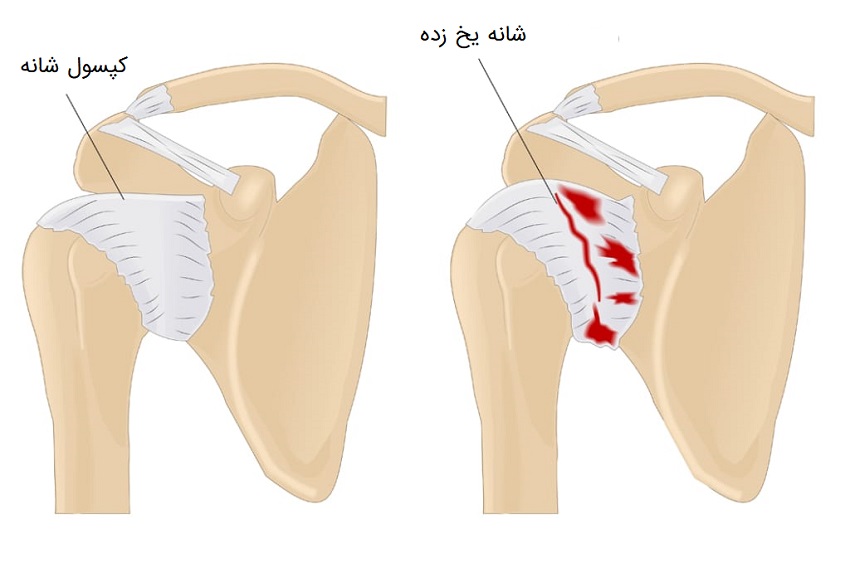
Adhesive capsulitis ("frozen shoulder") is characterized by progressive inflammation and thickening of the glenohumeral joint capsule, leading to painful restriction of shoulder motion — both active and passive — in all planes. It follows a classic three-phase course: a painful freezing phase (3–9 months), a frozen phase with stiffness and less pain (4–12 months), and a thawing phase of gradual spontaneous recovery (5–24 months). Total duration is typically 1–3 years.
The most common precipitating factors are diabetes, thyroid disorders, prior shoulder injury, prolonged immobilization, and cardiac or pulmonary conditions. It is more common in women and in the non-dominant shoulder.
Diagnosis
exam first, imaging secondDiffuse shoulder pain with restricted motion in all planes — a key distinguishing feature from rotator cuff problems, where passive motion is typically preserved. Loss of external rotation is the most sensitive finding. X-rays are usually normal. MRI may show capsular thickening and enhancement.
Treatment Path
how care progresses at OSI1
Physical therapy
Gentle stretching and range-of-motion exercises — aggressive stretching can worsen the inflammatory phase and is counterproductive.
2
NSAIDs
Reduce inflammation and improve comfort for therapy.
3
Intra-articular corticosteroid injection
Injection into the shoulder joint significantly speeds recovery of range of motion, particularly in the early freezing phase — one of the most effective treatments.
Hydrodilatation
Distension of the joint capsule with saline and steroid under fluoroscopic guidance — can provide rapid improvement in motion.
Surgical Options at OSI
if non-operative care isn't enoughSurgery is considered for patients with persistent severe restriction (typically > 6 months) that has not responded to injections and therapy.
Providers Who Treat Adhesive Capsulitis (frozen Shoulder)
sports-medicine team

David B. Templin, M.D.

Trent Twitero, M.D.
Further Reading
authoritative sourcesExternal patient-education references and related OSI pages for additional background: