
Overview
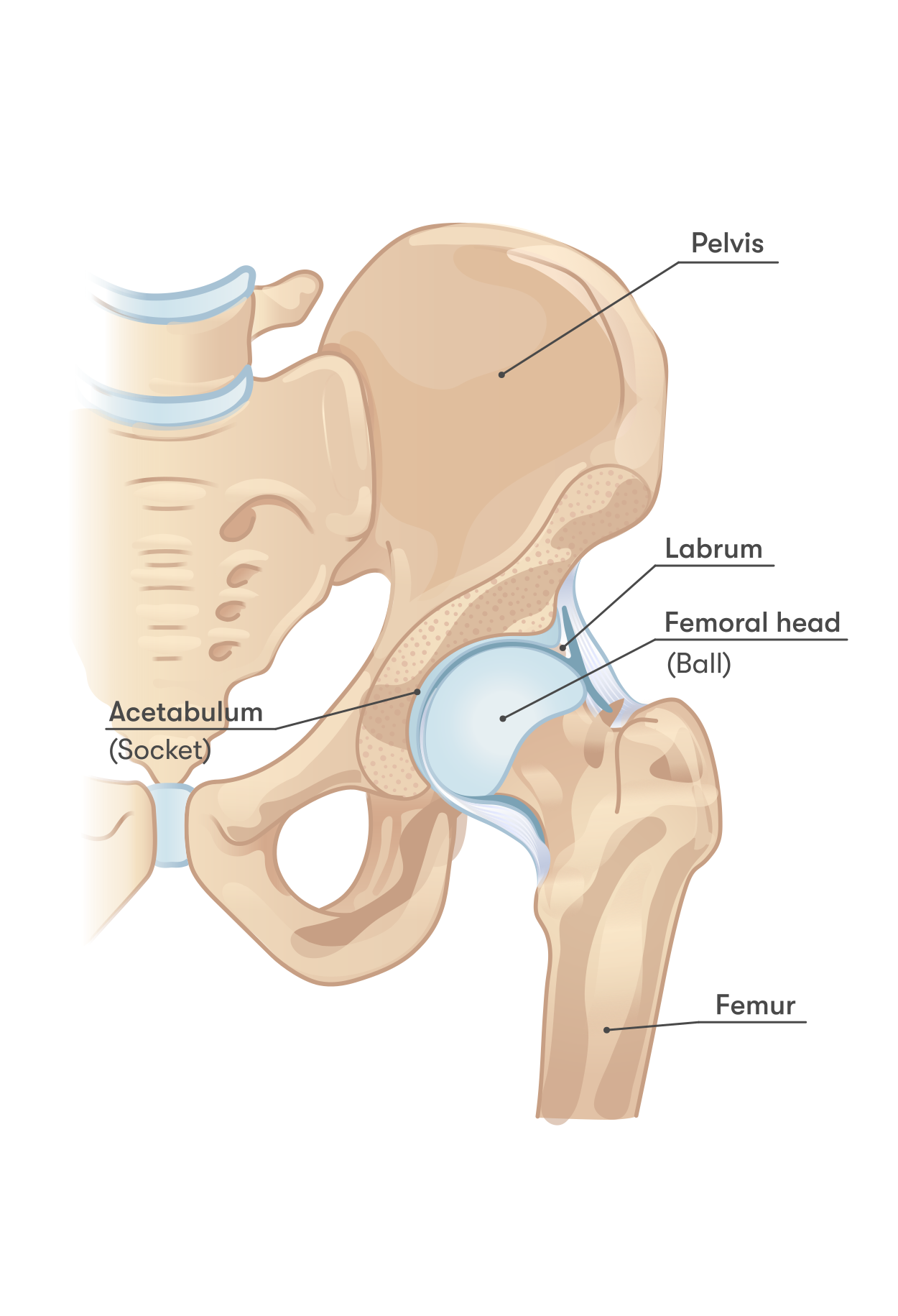
The pelvis is a ring made up of the sacrum and the two innominate bones. Because it is a ring, an injury on one side is almost always accompanied by an injury on the other. High-energy pelvic ring fractures can be life-threatening due to the risk of major bleeding from pelvic vessels and associated organ injuries.
Initial management prioritizes hemodynamic stabilization, often with a pelvic binder and, in select cases, an external fixator placed in the emergency department. Definitive fixation is performed once the patient is stable and is chosen from a range of techniques tailored to the fracture pattern.
Why it's done
Pelvic ring fracture ORIF is typically considered when imaging and the clinical picture together indicate that the fracture will not reliably heal or function without surgical stabilization. Common indications include:
Unstable ring disruption
Vertical or rotational instability needs internal fixation.
Displaced sacral or sacroiliac injury
Percutaneous iliosacral screws restore posterior-ring stability.
Symphysis pubis diastasis
Anterior plating restores the front of the ring.
Associated acetabular fracture
Combined ring and acetabular injuries require staged reconstruction.
Ongoing hemodynamic instability
External fixation or a binder may be lifesaving.
How it works
Posterior ring injuries are often stabilized with percutaneous iliosacral screws placed under fluoroscopic guidance. This requires a thorough understanding of pelvic anatomy to avoid neural and vascular structures.
Anterior ring injuries such as symphysis diastasis are plated through a small Pfannenstiel incision. An anterior external fixator may be used as temporary or definitive fixation, depending on the pattern and the patient.
Recovery
Weight-bearing after pelvic fixation is typically protected for ten to twelve weeks. Bed mobility, transfers, and assisted ambulation begin as soon as the patient can tolerate it. Bladder, bowel, and sexual function are monitored because these injuries can affect pelvic nerves. Nonunion and malunion are known risks, especially in comminuted or highly displaced injuries. External fixators, when used, are removed once the posterior ring is healed.
Contact
For questions about this procedure or to schedule an evaluation, call the office at (830) 625-0009 or request an appointment online.
Further Reading
External patient-education references and related OSI pages for additional background: