
Overview
what it is and why it matters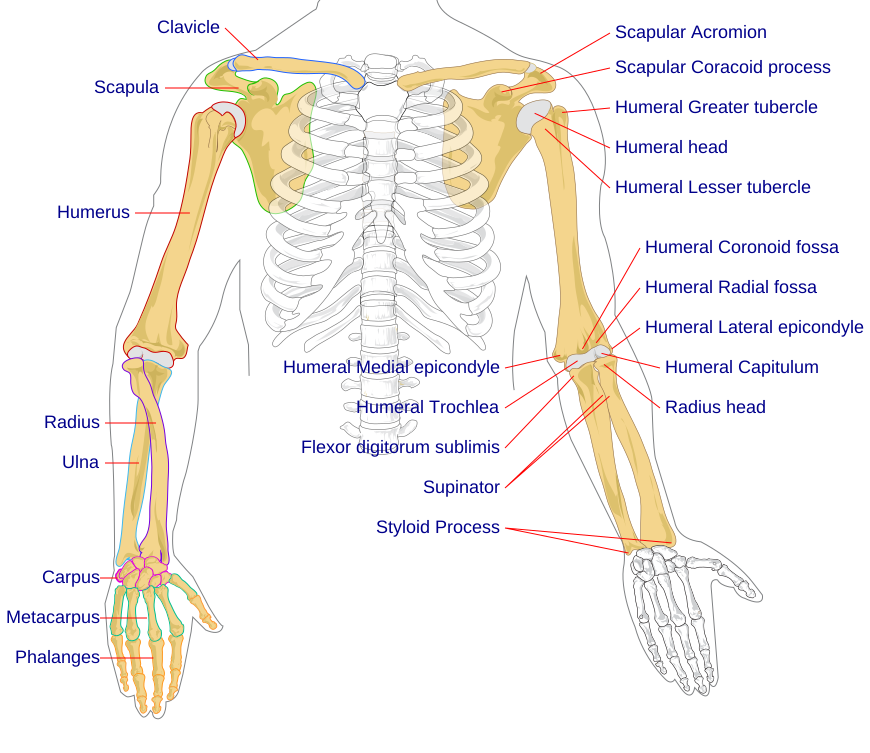
The elbow is the second most commonly dislocated large joint. Simple (posterior) dislocation from a fall onto an outstretched hand is the most common type; the radial head and ulna displace behind the humerus. Complex elbow dislocations involve associated fractures — the "terrible triad" (posterior dislocation + coronoid fracture + radial head fracture) is the most unstable combination. All elbow dislocations damage the collateral ligaments and capsule.
Diagnosis
exam first, imaging secondSevere elbow pain, deformity (posterior prominence), and inability to move the joint after trauma. Neurovascular exam — specifically the anterior interosseous and ulnar nerves — is critical. AP and lateral elbow X-rays confirm dislocation and identify fractures. Post-reduction CT evaluates associated injuries.
Treatment Path
how care progresses at OSI1
Closed reduction
Performed promptly under sedation — traction on the forearm with flexion of the elbow reduces most simple dislocations. Post-reduction stability is assessed on exam.
2
Hinged elbow brace
For stable post-reduction dislocations — early range of motion in a hinged brace prevents stiffness while protecting the healing ligaments.
Surgical Options at OSI
if non-operative care isn't enoughIrreducible dislocations, persistent instability after reduction, and complex dislocations with associated fractures require surgical repair or fixation.
Providers Who Treat Elbow Dislocation
sports-medicine team

David B. Templin, M.D.

Trent Twitero, M.D.
Further Reading
authoritative sourcesExternal patient-education references and related OSI pages for additional background: