
Overview
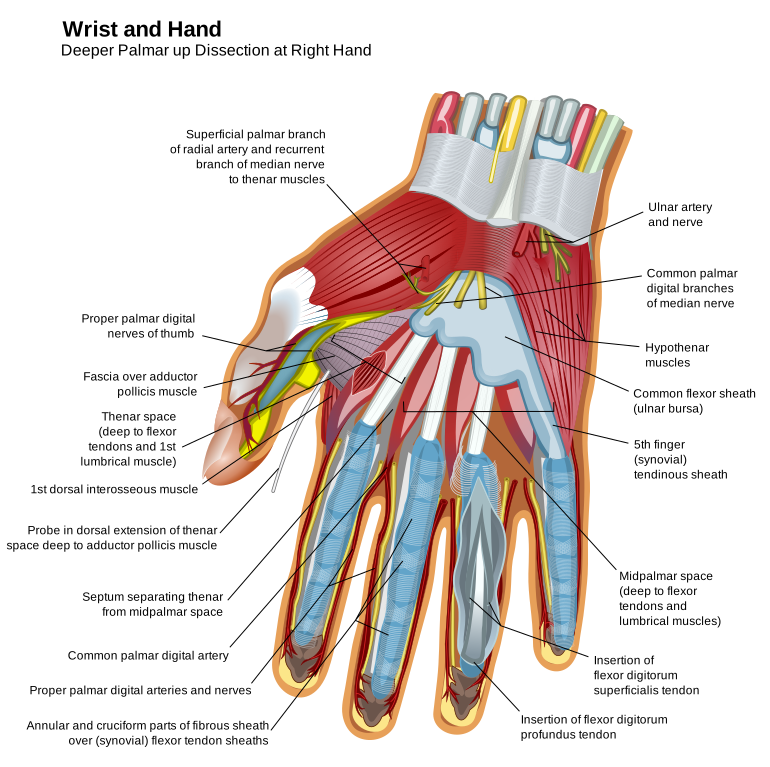
The median nerve passes through the carpal tunnel at the base of the palm, under the transverse carpal ligament. When pressure in that tunnel rises — from tendon swelling, fluid, or simply anatomic tightness — the nerve is compressed, producing numbness and tingling in the thumb, index, middle, and radial half of the ring finger. Night symptoms are classic.
How the Procedure Works
The choice between open and endoscopic release depends on anatomy and surgeon preference — both reliably decompress the nerve when done correctly. With an open approach we make a small incision in the palm, identify the transverse carpal ligament under direct vision, and divide it completely from distal to proximal, protecting the palmar cutaneous branch of the median nerve and the recurrent motor branch that swings back to the thenar muscles. Incomplete release is the most common reason symptoms persist, so we confirm the entire ligament is divided before closing. With an endoscopic release, a cannula is passed through a single wrist-crease portal and the ligament is cut from underneath using a camera for visualization — smaller scar, often slightly faster grip recovery, same decompression result. Numbness in the fingers typically begins improving within days; thenar weakness and atrophy take longer, sometimes months, because nerve regeneration is slow.
When to Consider Carpal Tunnel Release
Carpal tunnel release is generally offered when symptoms, imaging, and a trial of non-operative care together point to surgery as the next step. The typical picture includes:
Median nerve symptoms
Numbness, tingling, and night symptoms in the median nerve distribution of the hand.
Failed conservative care
Night splinting, activity modification, and a corticosteroid injection that has not produced lasting relief.
Electrodiagnostic confirmation
A nerve conduction study confirming median neuropathy at the wrist.
Conditions This Treats
Physicians Who Perform Carpal Tunnel Release


David B. Templin, M.D.

Trent Twitero, M.D.
Providers Who Surgically Assist with Carpal Tunnel Release

Sydney Georg, PA-C

Ben Swanner, PA-C
Further Reading
External patient-education references and related OSI pages for additional background: