
Overview
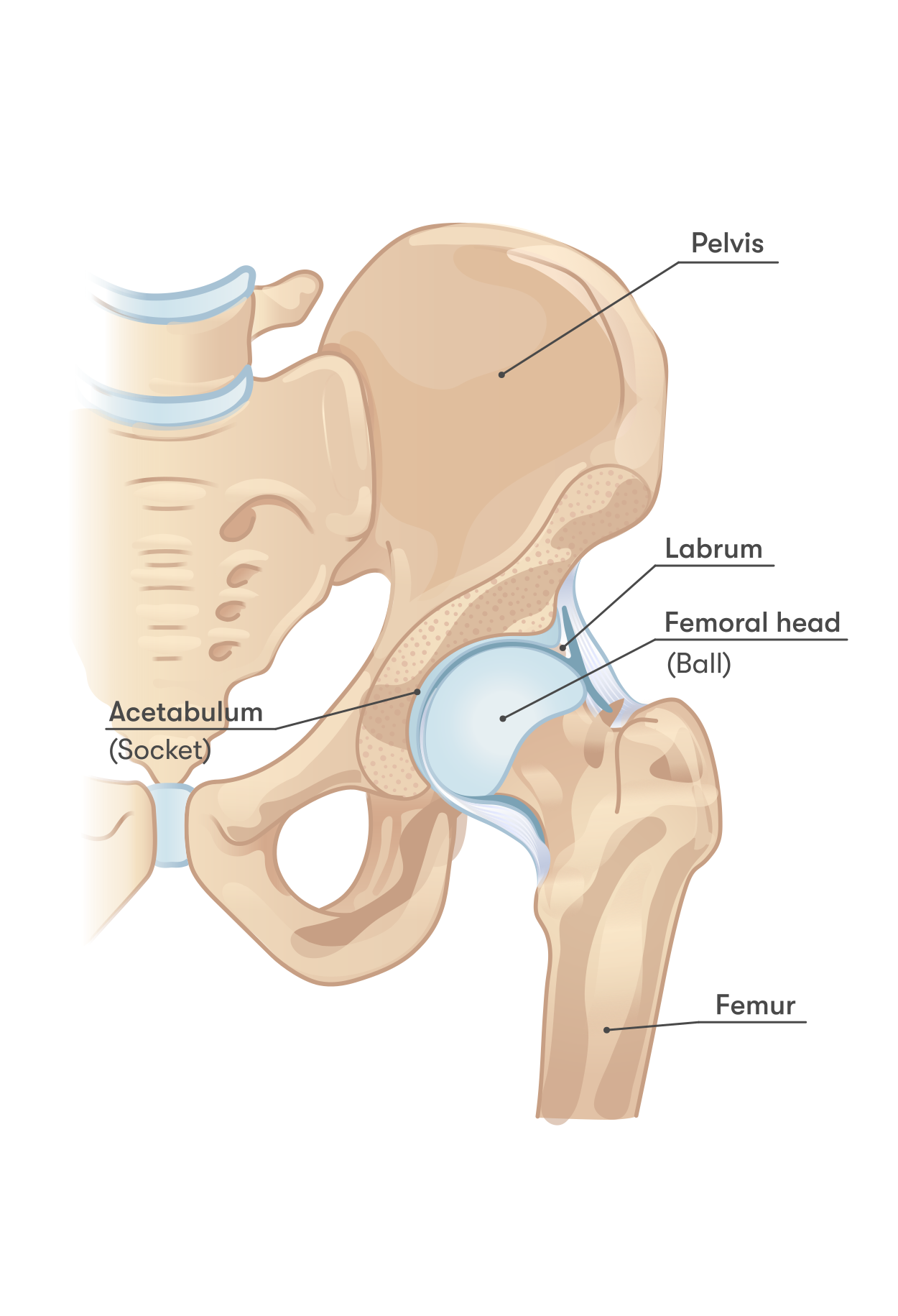
The acetabulum is the cup of the pelvis that holds the femoral head. Fractures typically follow high-energy injuries such as falls from height or sports collisions. Because the acetabulum is a weight-bearing joint surface, even small residual step-offs accelerate cartilage wear and lead to post-traumatic arthritis.
Surgical fixation is usually indicated for displaced fractures, fractures with loose bone in the joint, or patterns that make the hip unstable. The goal is to recreate a smooth, congruent socket so the hip can bear load and move through its full arc.
Why it's done
Acetabular fracture ORIF is typically considered when imaging and the clinical picture together indicate that the fracture will not reliably heal or function without surgical stabilization. Common indications include:
Displaced fracture with joint step-off
Any displacement across the weight-bearing dome usually warrants reduction to protect the cartilage.
Hip instability or dislocation
Acetabular fractures that allow the femoral head to sublux or dislocate require stabilization.
Intra-articular fragments
Loose bone fragments inside the joint need to be removed or replaced.
Fractures that cannot be reduced closed
Some patterns simply will not align without direct exposure of the bone.
How it works
The approach depends on the fracture pattern. Anterior-column patterns are typically addressed through an ilioinguinal or anterior intrapelvic approach; posterior-column and posterior-wall patterns use a Kocher–Langenbeck approach from behind the hip. Some complex patterns need combined approaches.
Once the fracture is exposed, fragments are reduced back to anatomic position under direct vision and fluoroscopic guidance. Pre-contoured pelvic reconstruction plates and long cortical screws secure the reduction. Intra-articular implants are avoided whenever possible.
For older patients with osteoporotic bone or damage to the femoral head, acute total hip replacement may be considered in place of or combined with fixation.
Recovery
Most patients are kept toe-touch or partial weight-bearing on the operated side for eight to twelve weeks. Crutches or a walker are used during that period. Formal physical therapy focuses on restoring hip range of motion early, with progressive strengthening once bony union is seen on X-ray. Full weight-bearing typically returns around three months. Hardware is rarely removed unless it becomes symptomatic. Post-traumatic hip arthritis is a known long-term risk even with a good reduction.
Contact
For questions about this procedure or to schedule an evaluation, call the office at (830) 625-0009 or request an appointment online.
Further Reading
External patient-education references and related OSI pages for additional background: