
Overview
what it is and why it matters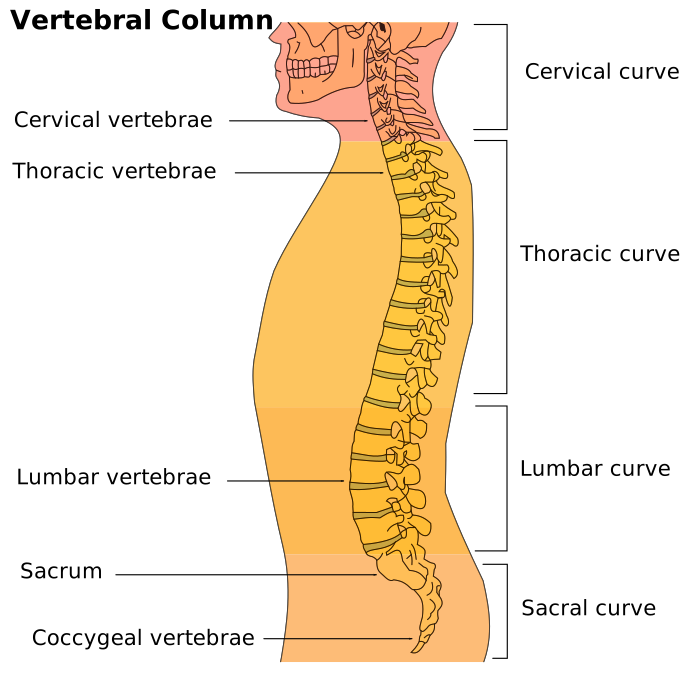
A cervical disc herniation occurs when the nucleus pulposus — the gel-like center of a cervical intervertebral disc — pushes through the annulus fibrosus and compresses adjacent neural structures. The herniation can be central (compressing the spinal cord), paracentral, or foraminal (compressing a nerve root). Most herniations are at C5-6 or C6-7.
Acute soft disc herniations typically occur in patients under 50 from a single event (heavy lifting, sudden rotation) or gradually with disc degeneration. Most resolve with conservative care.
Diagnosis
exam first, imaging secondMRI identifies the disc herniation, its relationship to the neural structures, and any cord signal change. Symptoms and physical examination determine which level is responsible. EMG/NCS is added when multiple levels are involved or when the diagnosis is unclear.
Treatment Path
how care progresses at OSIRest and activity modification
Acute herniations often improve significantly within 6 weeks.
NSAIDs / oral steroids
Reduce acute inflammation around the nerve root.
Physical therapy
Traction, McKenzie extension exercises, and stabilization.
Cervical epidural steroid injection
Highly effective for acute radicular pain, often avoiding surgery.
If Surgery Is Truly Needed
rare for most patientsSurgery helps only a small minority of spine patients — usually those with a specific structural problem plus a nerve issue that isn’t getting better with a structured non-operative trial. When that step is genuinely warranted, OSI coordinates it the same way we coordinate every other part of your care: imaging, records, and the handoff are handled for you, so no part of the process falls on your shoulders.
Emergency. Sudden loss of hand dexterity, worsening balance, arm or leg weakness, or loss of bladder or bowel control can reflect spinal-cord compression — go to the nearest emergency department rather than waiting for a clinic appointment.
Further Reading
authoritative sourcesExternal patient-education references and related OSI pages for additional background: