
Tenex — Percutaneous Tenotomy
An ultrasound-guided office procedure that removes diseased tendon tissue through a needle-sized opening — a middle step between injections and surgery.
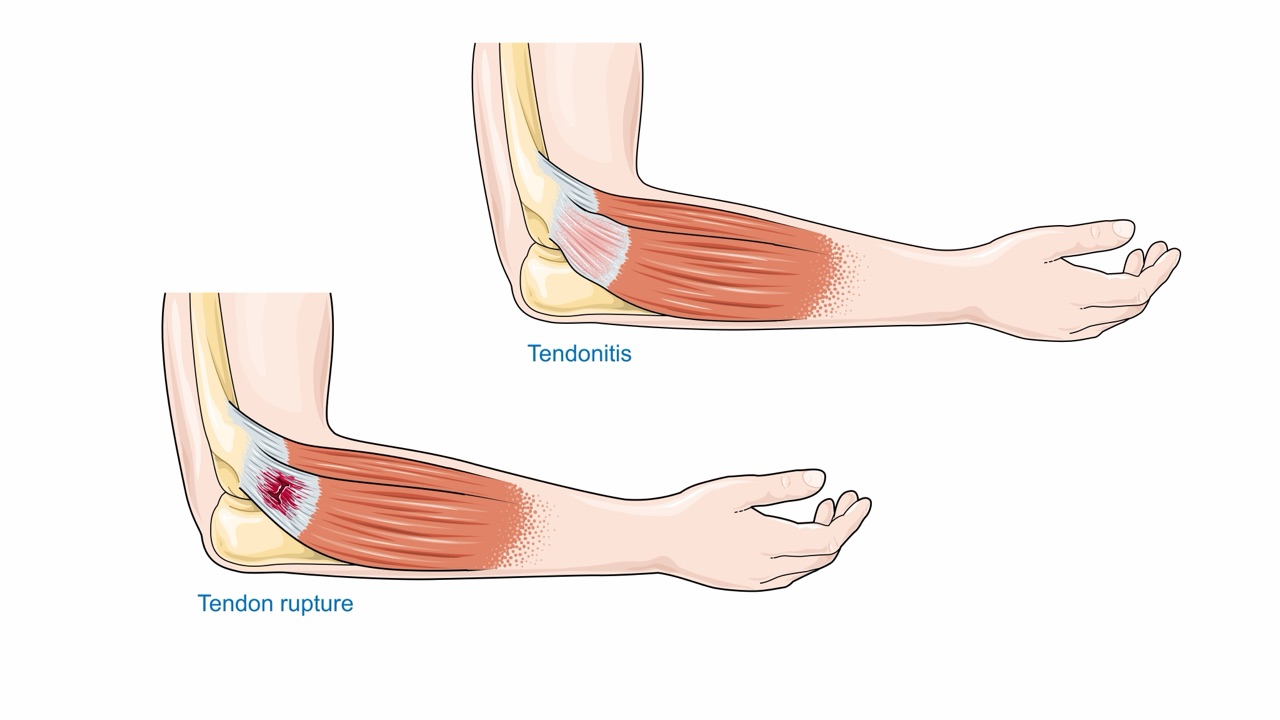
What It Is
Tenex is a short, ultrasound-guided procedure that targets and removes the small pocket of degenerated tissue inside a painful tendon. A numbed, needle-sized probe is introduced through the skin under ultrasound visualization. The probe uses high-frequency ultrasonic energy to break down and wash out the diseased tendon tissue while leaving the surrounding healthy fibers intact.
It is designed for people with chronic tendinopathy — a degenerative tendon problem, not an acute inflammation — that has not responded to physical therapy, bracing, and injections, but for whom traditional open surgery feels like too large a step. No sutures, no general anesthesia, and no overnight stay.
At OSI, the procedure is performed in the office using the TX1 device (manufactured by Tenex Health, from whom the procedure takes its common name). A related technology, TenJet, is used similarly.
Where It Fits in Care
Tenex is considered a step between injection therapy and open surgery. A reasonable candidate has:
- Pain in a specific tendon for at least 3–6 months.
- Imaging (ultrasound or MRI) showing tendon degeneration — thickened, disorganized fibers — rather than a clean tear needing repair.
- Completed a course of physical therapy and typically at least one targeted injection (cortisone, PRP, or similar) without lasting relief.
- A desire to avoid, or not yet be ready for, formal surgical debridement.
Conditions We Consider It For
Tennis elbow
Chronic outer-elbow tendinopathy that has not responded to a counterforce strap, physical therapy, and prior injection.
Golfer’s elbow
Long-standing inner-elbow tendon pain with similar indications.
Achilles tendinopathy
Mid-portion and selected insertional cases after a structured eccentric-loading program.
Plantar fasciitis
Stubborn heel pain when stretching, orthotics, and prior injections have not resolved symptoms.
Patellar tendinopathy (jumper’s knee)
Chronic kneecap-tendon pain that has failed a rehabilitation program.
Quadriceps tendinopathy
Degeneration at the top of the kneecap tendon after heavy slow resistance training and biologic injection.
Gluteus medius tendinopathy
Outer-hip pain due to chronic degeneration of the hip-abductor tendon.
What to Expect
- The procedure itself typically takes 5–10 minutes, performed in the office under local anesthesia.
- Ultrasound guides the probe to the exact area of damaged tissue, so the healthy tendon is not disturbed.
- The entry point is a small nick in the skin — smaller than a stitch and usually closed with a bandage rather than sutures.
- Expect 1–2 weeks of local soreness. A short period of relative rest, activity modification, and often a brace or boot follows, depending on the tendon treated.
- A structured return-to-activity program starts at around 2 weeks, with most patients resuming normal activity between 4 and 6 weeks.
- Improvement in tendon pain is usually felt gradually over 6–12 weeks and can continue to build for several months as the tendon remodels.
Insurance and Cost
Most insurance carriers still consider percutaneous tenotomy investigational for many indications, so coverage is inconsistent and typically limited. Patients who are not covered can proceed on a self-pay basis.
Self-pay pricing is available — ask at scheduling. A written estimate is provided in advance so there are no surprises.
Risks
- Local soreness and bruising at the entry site — expected and short-lived.
- Temporary swelling or stiffness in the nearby joint.
- Infection — rare with sterile technique.
- Injury to nearby tissue — very uncommon with ultrasound guidance.
- No benefit — the most common “complication.” As with any tendon treatment, response is not universal, and some patients still go on to open surgical debridement.
Next Steps
Tenex is most useful when the diagnosis is clear and more conservative measures have been exhausted. An in-person evaluation with ultrasound or MRI review is the right starting point. Request an appointment or call (830) 625-0009.