
Overview
what it is and why it matters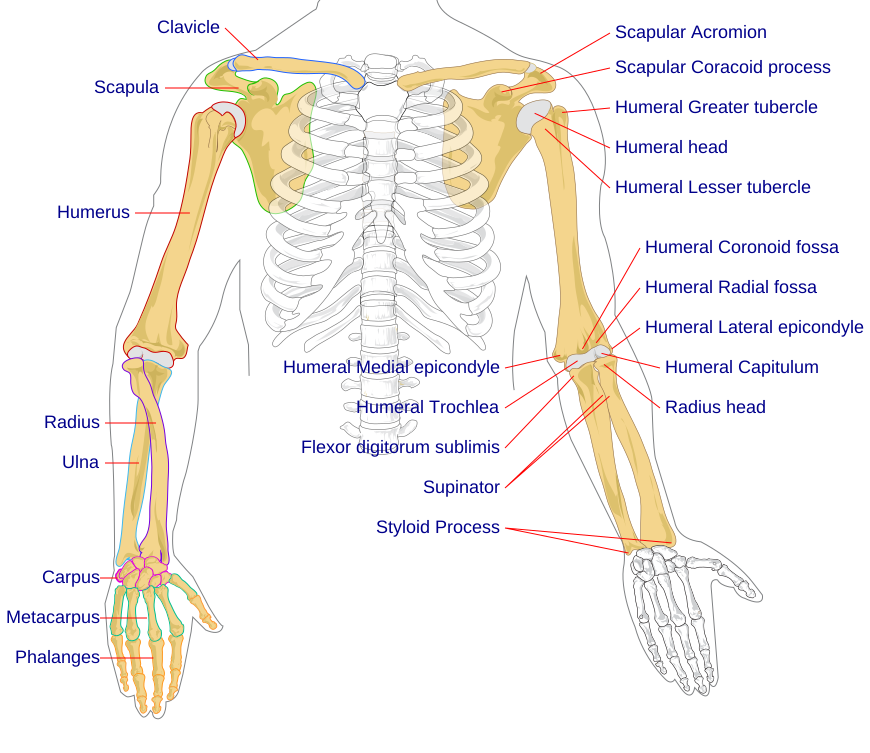
Radial head fractures are the most common elbow fractures, accounting for approximately 30% of all elbow injuries. They occur from a fall on an outstretched arm — the radial head impacts the capitellum. The Mason classification (I–IV) describes fracture severity from undisplaced to comminuted radial head with associated injuries. Associated injuries — including medial collateral ligament tears, posterior interosseous nerve injury, and Essex-Lopresti interosseous membrane disruption — must be evaluated.
Diagnosis
exam first, imaging secondLateral elbow pain after a fall, with tenderness over the radial head. The "radiocapitellar joint aspiration test" (removal of hemarthrosis provides immediate pain relief and enables range-of-motion assessment) helps determine if a block to motion exists. AP and lateral X-rays with radiocapitellar view. CT characterizes comminution.
Treatment Path
how care progresses at OSI1
Aspiration of hemarthrosis + early motion
For Mason Type I fractures — aspiration of the blood in the joint, injection of local anesthetic, and early range of motion within 24–48 hours.
2
Sling and early motion
Brief sling for comfort followed by progressive range-of-motion exercises.
Surgical Options at OSI
if non-operative care isn't enoughMason Type II–III fractures with mechanical block to forearm rotation, associated ligament instability, or more than 2 mm displacement with significant angulation require operative treatment.
Providers Who Treat Radial Head Fracture
sports-medicine team

David B. Templin, M.D.

Trent Twitero, M.D.
Further Reading
authoritative sourcesExternal patient-education references and related OSI pages for additional background: