
Overview
what it is and why it matters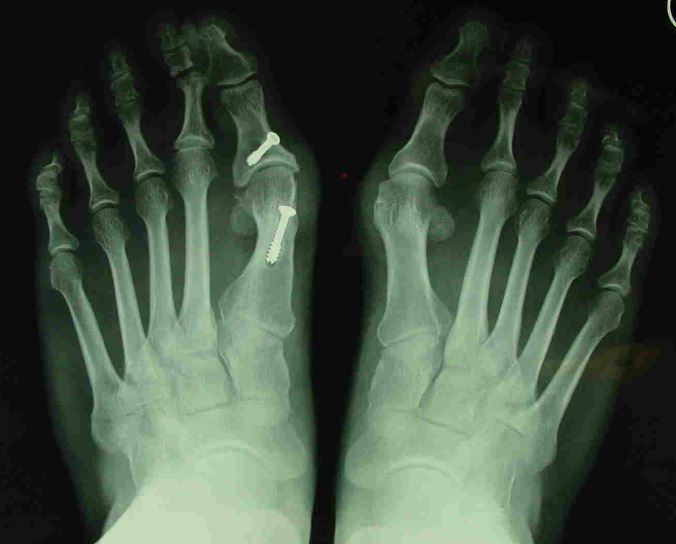
Hallux valgus — commonly called a bunion — is a progressive deformity in which the great toe angles toward the lesser toes and the first metatarsal head drifts medially, creating a bony prominence. The deformity involves the entire first ray: metatarsophalangeal joint subluxation, sesamoid displacement, pronation of the great toe, and secondary crowding of the lesser toes. Narrow footwear accelerates progression in genetically predisposed individuals.
Most patients are women (8:1). Symptoms include bunion pain with footwear, callus formation, and sometimes lesser toe deformity.
Diagnosis
exam first, imaging secondWeight-bearing AP and lateral foot X-rays quantify the hallux valgus angle (HVA) and first-second intermetatarsal angle (IMA), which guide the appropriate surgical correction. Sesamoid position and first TMT joint stability (for Lapidus procedure candidacy) are assessed.
Treatment Path
how care progresses at OSIWider/softer footwear
Accommodates the deformity and reduces bunion pressure.
Bunion pad
Protects the medial prominence from shoe pressure.
Toe spacer / orthotic
Helps with mild deformity and associated metatarsalgia.
Surgical Options at OSI
if non-operative care isn't enoughSurgery is indicated for symptomatic bunions that have failed footwear modification and accommodation. Pain — not cosmesis — is the indication for surgery.
Further Reading
authoritative sourcesExternal patient-education references and related OSI pages for additional background: