
Overview
what it is and why it matters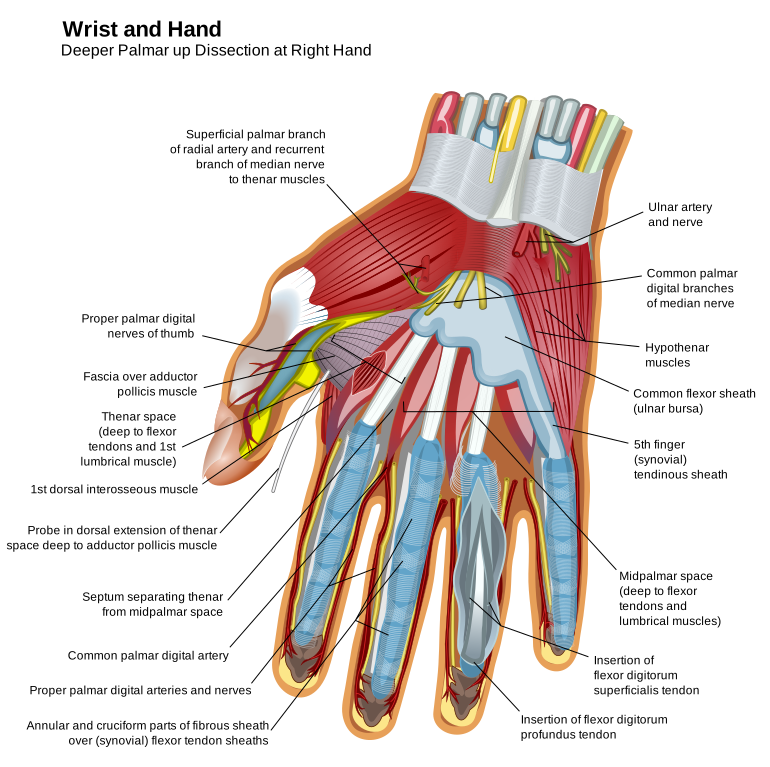
Jersey finger is an avulsion of the flexor digitorum profundus (FDP) tendon from its insertion at the base of the distal phalanx. The ring finger is most commonly affected. The injury occurs when a flexed finger is forcibly extended while the FDP is contracting — the classic mechanism is grabbing a jersey (or opponent's clothing) while the finger is pulled back.
The patient cannot flex the DIP joint of the affected finger. The proximal end of the avulsed tendon may retract into the palm.
Diagnosis
exam first, imaging secondExamination: the patient cannot flex the DIP joint when the PIP and MCP are held extended. Tenderness may be felt at the finger tip, the finger, or as proximal as the palm where the tendon has retracted. X-ray identifies a bony avulsion fragment. MRI locates the tendon end when plain films are negative.
Treatment Path
how care progresses at OSI1
Observation (select cases)
Only for elderly, low-demand patients who accept the loss of DIP flexion.
Surgical Options at OSI
if non-operative care isn't enoughJersey finger is nearly always treated surgically; the avulsed tendon retracts and becomes ischemic within 1–2 weeks, making delayed repair progressively more difficult. Early repair (within 7–10 days) is strongly preferred.
Providers Who Treat Jersey Finger
sports-medicine team

David B. Templin, M.D.

Trent Twitero, M.D.
Further Reading
authoritative sourcesExternal patient-education references and related OSI pages for additional background: