
Overview
what it is and why it matters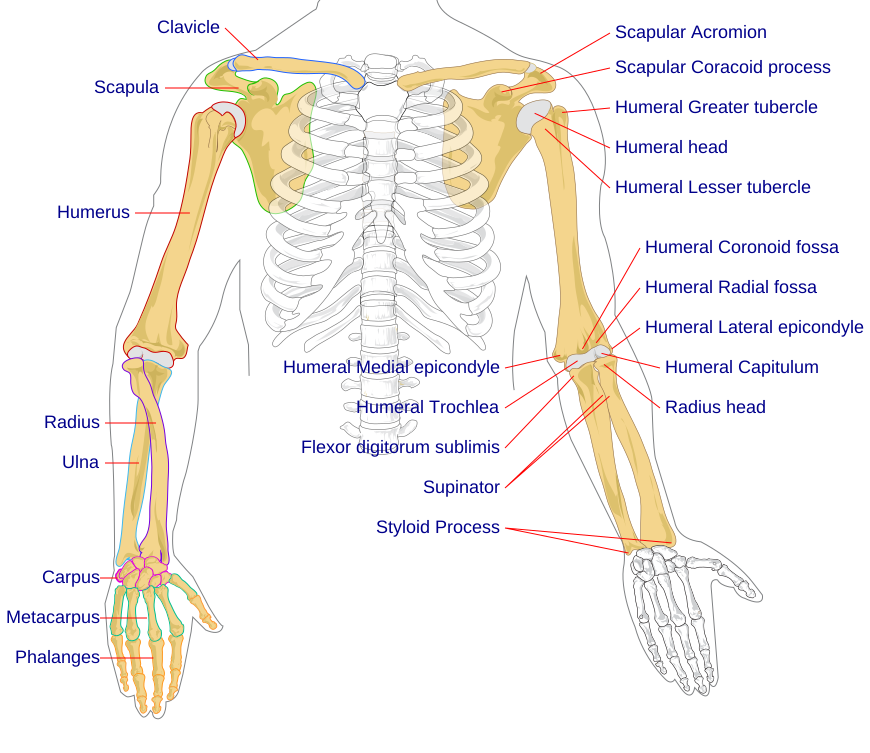
Radial tunnel syndrome is caused by compression of the posterior interosseous nerve (deep branch of the radial nerve) as it passes through the radial tunnel — a channel just past the lateral epicondyle that is bordered by the radial head, the extensor muscles, and the arcade of Frohse (a fibrous arch). Unlike lateral epicondylitis, the pain is located 4–5 cm distal to the lateral epicondyle over the radial head/neck, rather than at the epicondyle itself. True radial tunnel syndrome causes pain, not weakness; paralysis of finger/wrist extension indicates posterior interosseous nerve (PIN) syndrome, a more severe compression.
Diagnosis
exam first, imaging secondLateral forearm pain distal to the lateral epicondyle, worsened by resisted middle finger extension (middle finger extension test) and resisted forearm supination. Distinguishing from lateral epicondylitis can be challenging — both cause lateral elbow pain. Diagnostic injection of local anesthetic into the radial tunnel (not the lateral epicondyle) confirms radial tunnel syndrome. MRI and EMG are often normal.
Treatment Path
how care progresses at OSI1
Activity modification
Reducing provocative movements — wrist extension and forearm rotation.
2
Physical therapy
Nerve mobilization, periscapular strengthening, and muscle flexibility exercises.
3
NSAIDs
Anti-inflammatory management.
Radial tunnel injection
Local anesthetic ± corticosteroid injection into the radial tunnel provides diagnostic and therapeutic benefit.
Surgical Options at OSI
if non-operative care isn't enoughRefractory radial tunnel syndrome after 3–6 months of conservative treatment is considered for surgical decompression.
Providers Who Treat Radial Tunnel Syndrome
sports-medicine team

David B. Templin, M.D.

Trent Twitero, M.D.
Further Reading
authoritative sourcesExternal patient-education references and related OSI pages for additional background: