
Overview
what it is and why it matters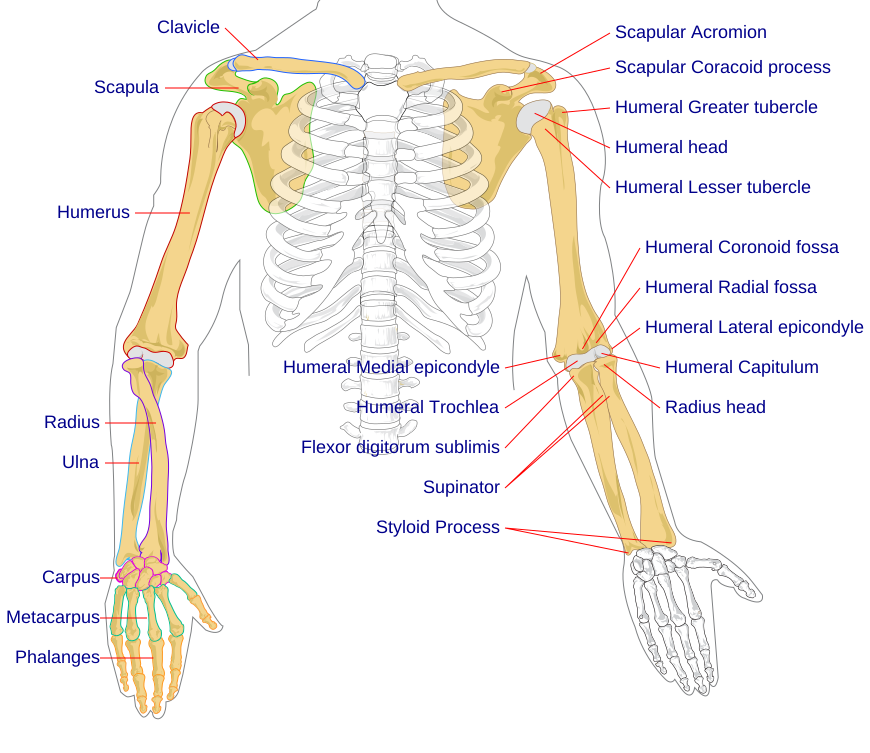
The ulnar collateral ligament (UCL) — specifically the anterior bundle of the medial collateral ligament — is the primary restraint against valgus (inward-bending) stress at the elbow. It is subjected to enormous loads during overhead throwing, where valgus stress on the medial elbow is among the highest forces in any sport. UCL injuries range from sprains (grade I–II) to complete rupture (grade III) and are the defining injury of baseball pitchers, but also occur in javelin throwers, quarterbacks, and wrestlers.
Diagnosis
exam first, imaging secondMedial elbow pain with throwing, loss of velocity, and medial instability on valgus stress testing at 30° of flexion. The moving valgus stress test is the most sensitive examination maneuver. MRI with contrast (MR arthrography) shows partial or complete UCL tears. Electrodiagnostic studies exclude concurrent carpal tunnel syndrome). The ulnar nerve passes through the cubital tunnel — a bony groove behind the medial…">cubital tunnel syndrome.
Treatment Path
how care progresses at OSI1
Rest and activity modification
4–6 weeks of throwing cessation for grade I–II sprains.
2
Physical therapy
Medial forearm flexor-pronator strengthening, posterior capsule stretching, and throwing biomechanics correction.
3
PRP injection
Evidence supports PRP for partial UCL tears — can facilitate return to throwing without surgery in a subset of patients.
Surgical Options at OSI
if non-operative care isn't enoughComplete UCL tears in competitive throwing athletes and partial tears that fail to respond to rehabilitation and PRP are treated with UCL reconstruction.
Providers Who Treat Ucl Injury
sports-medicine team

David B. Templin, M.D.

Trent Twitero, M.D.
Further Reading
authoritative sourcesExternal patient-education references and related OSI pages for additional background: