
Overview
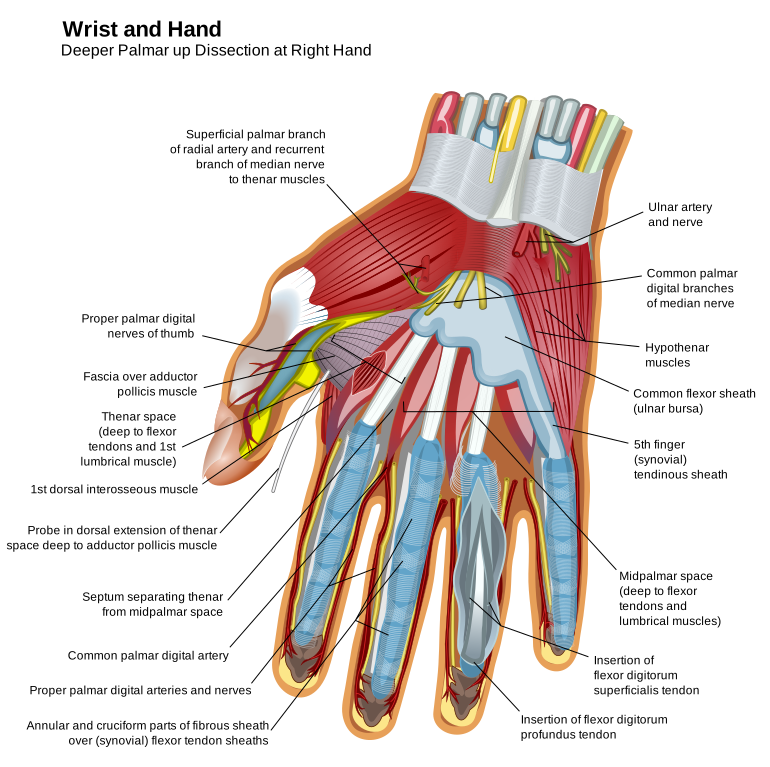
Flexor tendons in the finger glide through a series of fibrous pulleys. When the first pulley — the A1 pulley at the base of the finger — becomes thickened or the tendon develops a nodule, the tendon catches as it passes through. The finger locks in flexion and snaps open painfully. Surgical release of that pulley restores free gliding.
How the Procedure Works
A small incision at the base of the finger exposes the A1 pulley; we open it along its full length with a scalpel, then directly test tendon glide by asking the patient — done under local anesthesia — to actively flex and extend the finger. Free glide without catching confirms a complete release. We preserve the A2 pulley just distal to it and all remaining pulleys: the A2 is the most important pulley for preventing bowstringing, and cutting it would trade one problem for another. For the thumb, the anatomy shifts slightly — the relevant pulley sits more proximal — and the digital nerves diverge closer to the incision, so we work carefully to stay in the midline.
When to Consider Trigger Finger Release
Trigger finger release is generally offered when symptoms, imaging, and a trial of non-operative care together point to surgery as the next step. The typical picture includes:
Symptomatic triggering
Catching or locking of the finger not relieved by activity modification, splinting, or steroid injection.
Locked finger
A finger that has locked in flexion and cannot be extended actively.
Recurrent triggering
Return of symptoms after previous injection — a signal that the underlying structural problem needs direct treatment.
Conditions This Treats
Physicians Who Perform Trigger Finger Release


David B. Templin, M.D.

Trent Twitero, M.D.
Providers Who Surgically Assist with Trigger Finger Release

Sydney Georg, PA-C

Ben Swanner, PA-C
Further Reading
External patient-education references and related OSI pages for additional background: