
Overview
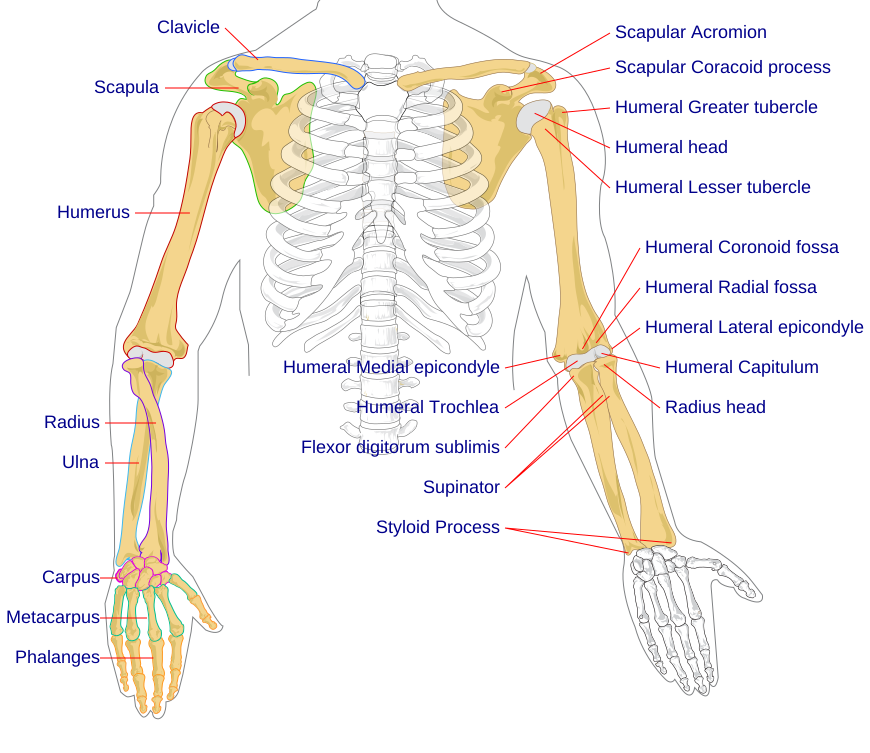
The distal humerus forms the upper half of the elbow joint and has a complex shape with two articular surfaces — the capitellum and the trochlea. Fractures here are often intra-articular and associated with significant comminution.
Non-operative treatment of displaced distal humerus fractures leads to stiffness and loss of function. Surgery restores the joint surface and provides enough stability to begin early motion, which is the single most important factor for a good elbow outcome.
Why it's done
Distal humerus ORIF is typically considered when imaging and the clinical picture together indicate that the fracture will not reliably heal or function without surgical stabilization. Common indications include:
Displaced intra-articular fracture
Articular step-off will lead to arthritis and loss of motion.
Supracondylar fracture with displacement
The bone column needs rigid fixation to allow early motion.
Open fracture or neurovascular compromise
Urgent surgery protects the soft tissues and nerves.
Fractures in the elderly with osteoporotic bone
Total elbow replacement may be considered for low-demand patients.
How it works
The elbow is typically approached from the back through an olecranon osteotomy or a triceps-sparing exposure. The joint surface of the distal humerus is reconstructed first with small screws, and then two perpendicular or parallel plates are applied along the medial and lateral columns.
The ulnar nerve is identified and protected throughout. Fluoroscopy and direct inspection confirm that the articular reduction is anatomic. The olecranon osteotomy, if used, is repaired with a tension-band construct or plate.
Recovery
Early elbow motion is critical. A removable splint is used for comfort, and supervised active and assisted motion typically begins within the first one to two weeks. Strengthening starts at six to eight weeks as pain allows. Full functional recovery can take six months or longer. Ulnar nerve symptoms and elbow stiffness are the most common complications. Hardware is removed only for persistent symptoms.
Contact
For questions about this procedure or to schedule an evaluation, call the office at (830) 625-0009 or request an appointment online.
Further Reading
External patient-education references and related OSI pages for additional background: