
Overview
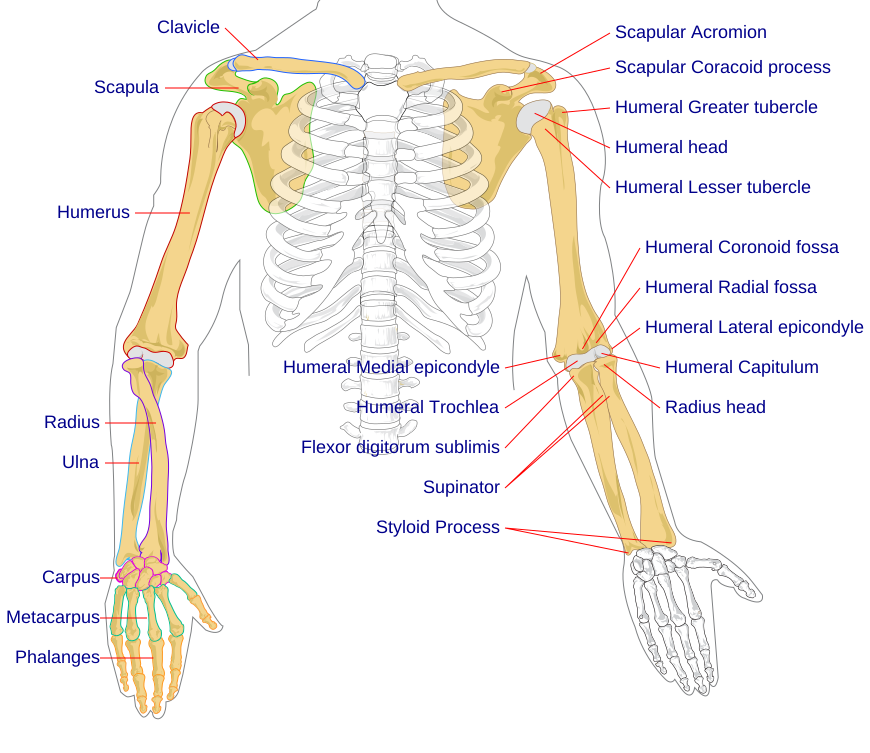
The triceps extends the elbow — essential for pushing, throwing, and overhead work. Rupture of the distal triceps is uncommon but almost always requires surgical repair when complete, because the muscle cannot overcome gravity against extension without its attachment.
How the Procedure Works
We expose the olecranon tip through a posterior incision, retrieve the retracted tendon, and prepare its end with heavy non-absorbable sutures in a locking configuration. The olecranon footprint — a broad, rough area at the tip — is freshened to bleeding bone. We anchor the tendon either through transosseous tunnels drilled side-to-side through the olecranon or with suture anchors, depending on bone quality; tunnels generally provide stronger fixation in good bone. The critical intraoperative check is elbow flexion with the repair under load: the tendon should sit flat on bone at 30–40° of flexion without gapping, which is the position we protect in the early postoperative brace.
When to Consider Distal Triceps Repair
Distal triceps repair is generally offered when symptoms, imaging, and a trial of non-operative care together point to surgery as the next step. The typical picture includes:
Acute distal triceps rupture
Complete tear with loss of active elbow extension against gravity.
Partial tear with persistent weakness
A partial tear that has not improved with conservative care and continues to limit activity.
Conditions This Treats
Physicians Who Perform Distal Triceps Repair


David B. Templin, M.D.

Trent Twitero, M.D.
Providers Who Surgically Assist with Distal Triceps Repair

Sydney Georg, PA-C

Ben Swanner, PA-C
Further Reading
External patient-education references and related OSI pages for additional background: