
Overview
what it is and why it matters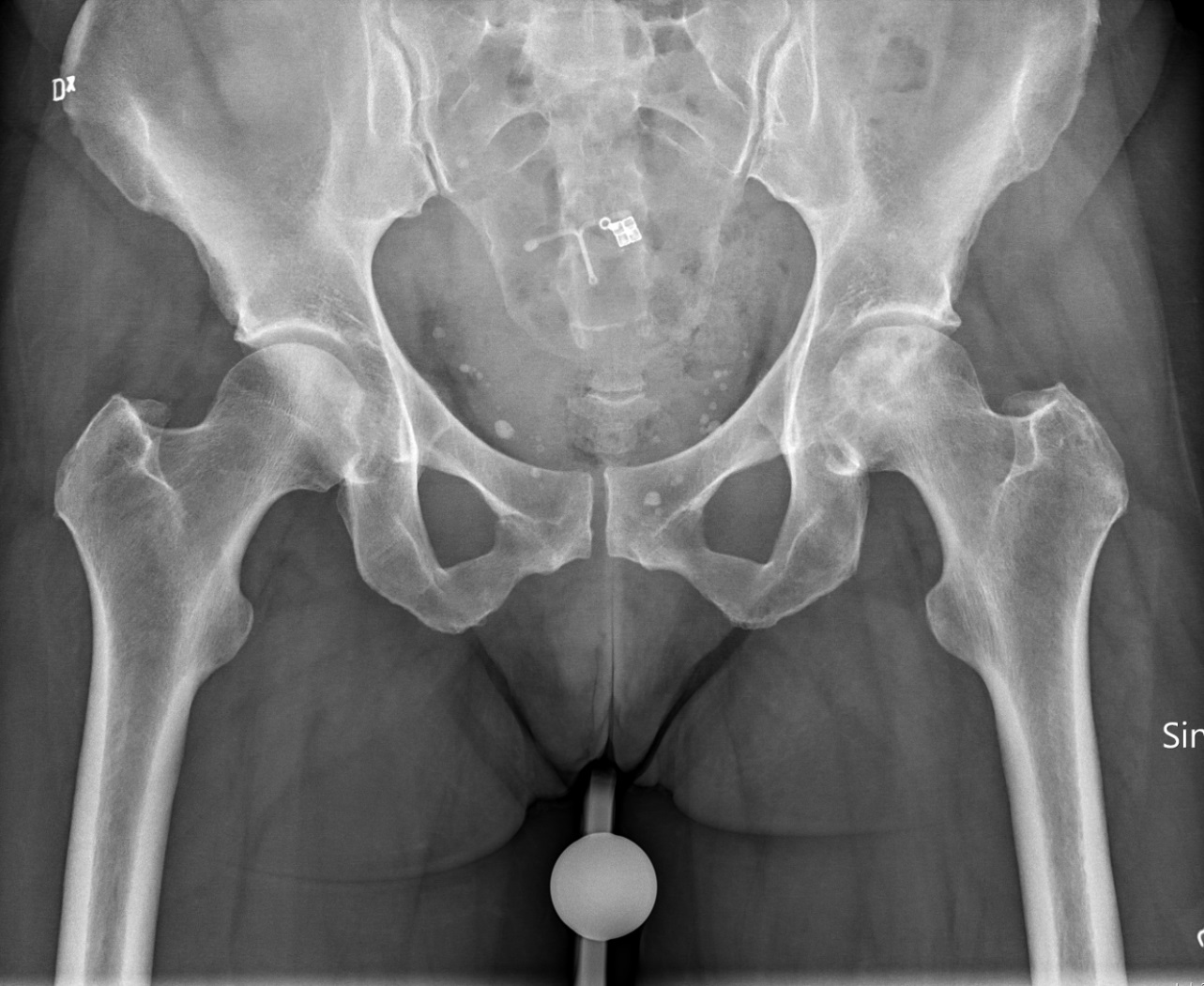
Avascular necrosis (AVN) — also called osteonecrosis — occurs when the blood supply to the femoral head is interrupted or compromised, causing the bone to die. Without blood, the dead bone cannot support the joint, and the femoral head eventually collapses, producing rapid and often severe arthritis.
Risk factors include high-dose or prolonged corticosteroid use, excessive alcohol use, hip dislocation or fracture, sickle cell disease, clotting disorders, and prior radiation. In many cases no clear cause is found (idiopathic). AVN is bilateral in up to 80% of cases and tends to affect adults in their 30s–50s.
Diagnosis
exam first, imaging secondEarly AVN is often silent — the first symptom is groin pain that may be vague. By the time X-rays show the characteristic "crescent sign" or subchondral collapse, the disease is advanced. MRI is the gold-standard imaging study and can detect AVN weeks to months before X-ray changes appear. Staging (Ficat or ARCO classification) guides treatment decisions.
Treatment Path
how care progresses at OSI1
Protected weight-bearing
Reducing load on the femoral head in early-stage disease may slow collapse, though evidence is limited.
2
NSAIDs and analgesics
Symptom control during evaluation and planning.
3
Bisphosphonates
Some evidence supports bisphosphonate therapy in early-stage AVN to slow collapse, though data remain mixed.
Extracorporeal shock wave therapy
Non-invasive treatment with emerging evidence for early-stage AVN.
Surgical Options at OSI
if non-operative care isn't enoughMost patients with AVN beyond the earliest stages ultimately require surgery. The choice of procedure depends on the stage, the size of the necrotic lesion, and whether the femoral head has collapsed.
Providers Who Treat Avascular Necrosis of the Hip
sports-medicine team

David B. Templin, M.D.

Trent Twitero, M.D.
Further Reading
authoritative sourcesExternal patient-education references and related OSI pages for additional background: