
Overview
what it is and why it matters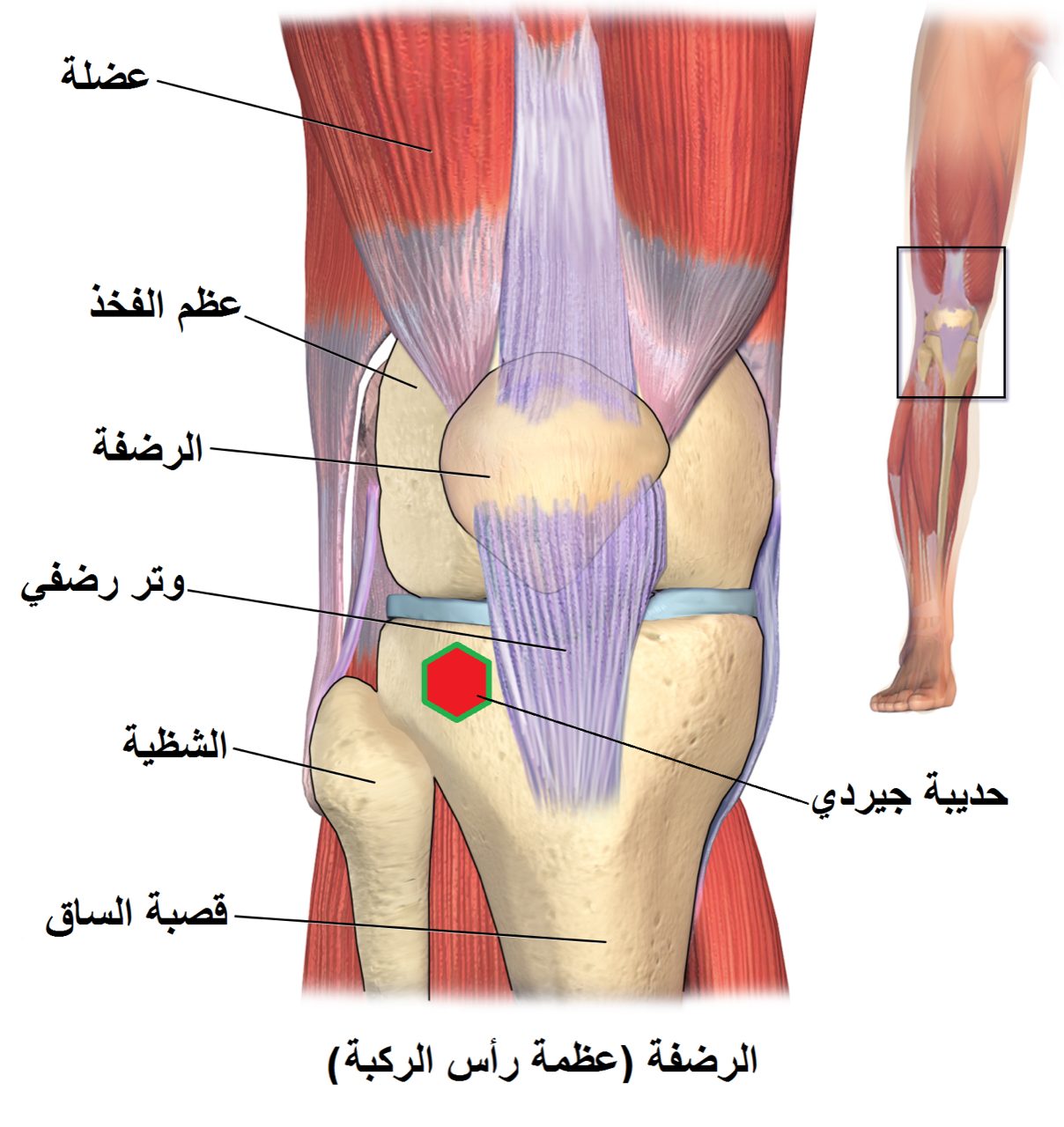
The menisci are two C-shaped fibrocartilaginous pads — one medial, one lateral — interposed between the femoral condyles and the tibial plateau. They deepen the joint, absorb and distribute load, and contribute to stability and proprioception. A tear disrupts that function. Medial meniscus tears are roughly three times more common than lateral and are classified by pattern (longitudinal, radial, horizontal, flap, complex) and by mechanism (acute or degenerative).
In younger patients, tears usually follow a twisting or cutting injury, often alongside ACL rupture. In middle-aged and older patients, tears are most often degenerative — a gradual failure of aging tissue, frequently coexisting with underlying osteoarthritis (AAOS OrthoInfo; JAAOS 2019;27:e755–e764).
Anatomy & Mechanism
a vascular map that drives treatmentThe menisci have three vascular zones. Only the outer third ("red zone") has a reliable blood supply and the biological capacity to heal. The middle third ("red-white zone") heals inconsistently, and the inner two-thirds ("white zone") heal poorly. Tear location on this map — together with the patient's age, activity demands, and the pattern of the tear itself — determines whether repair is likely to succeed or whether debridement is more appropriate.
Acute tears occur when the flexed knee is loaded and rotated. Degenerative tears develop insidiously as the tissue loses its collagen architecture with age.
Symptoms
what patients describe- Medial or lateral joint-line pain, localized to one side of the knee
- Mechanical symptoms — catching, locking, or a sense of something moving inside the joint
- Pain with squatting, twisting, or rising from a chair
- Delayed swelling developing over 24–48 hours (in contrast to the immediate hemarthrosis of an ACL tear)
- A palpable click with deep flexion in some patients
Diagnosis
exam and MRIJoint-line tenderness, a positive McMurray test, a positive Thessaly test, and pain with forced flexion support the diagnosis. Plain X-rays are obtained to rule out fracture and to assess for concurrent osteoarthritis — an important factor in decision-making, since arthroscopic meniscectomy for degenerative tears in an arthritic knee has not been shown to improve outcomes over structured physical therapy (Katz et al., N Engl J Med 2013;368:1675–84; Sihvonen et al., N Engl J Med 2013;369:2515–24).
MRI defines tear pattern, length, location relative to the vascular zones, and associated ligament or cartilage injury. It is obtained when the diagnosis is uncertain, when operative planning is needed, or when symptoms do not improve with initial nonoperative care.
Nonoperative Treatment
often the right starting pointFor degenerative tears and for most stable tears without true mechanical locking, a structured nonoperative trial is the standard first step.
1
Relative rest & activity modification
Avoid deep squatting, twisting, and impact while the meniscus quiets down. Swimming, cycling, and flat walking remain available.
2
Physical therapy
Quadriceps and hip strengthening unloads the meniscus and improves joint mechanics. For many degenerative tears, a structured therapy program produces outcomes on par with arthroscopic partial meniscectomy.
3
NSAIDs or targeted injection
Short-course oral NSAIDs address the inflammatory component. A single intra-articular corticosteroid injection may be helpful when pain prevents participation in therapy.
Operative Treatment
when mechanical symptoms persistArthroscopic surgery is considered for acute tears with true locking, unstable tear patterns that are likely to propagate, or persistent mechanical symptoms after a structured nonoperative trial. Whenever tear pattern, tissue quality, and vascular zone allow, repair is preferred over removal — preserving the meniscus preserves the knee. Repair is most successful in younger patients, in the peripheral (red-zone) tear, and when performed alongside concurrent ACL reconstruction (JAAOS 2022;30:e1–e12).
Preferred procedure when possible
Meniscus repair
Arthroscopic suture repair that preserves the meniscus. Requires protected weight-bearing and restricted flexion during healing.
Learn about this procedure →Alternative procedure
Partial meniscectomy
Arthroscopic removal of the unstable torn fragment. Reserved for patterns that cannot be repaired. Allows immediate weight-bearing and quick return to activity.
Learn about this procedure →Specialized option
Meniscus root repair
Transosseous reattachment of a torn meniscal root. Restores the meniscus's load-bearing function and slows progression to OA.
Learn about this procedure →Recovery & Expectations
varies by procedureRecovery depends on which procedure was performed. After a partial meniscectomy (removal of the unstable torn piece), weight-bearing is permitted as tolerated and most patients resume daily activities quickly; return to cutting and pivoting sport follows once strength and confidence return. After meniscus repair or root repair, protected weight-bearing and restricted flexion are required while the repair heals — this is not optional, and adherence directly affects the durability of the result. Return to sport after repair is later and more deliberate than after meniscectomy.
Preserving the meniscus, when feasible, lowers the lifetime risk of knee osteoarthritis compared with partial meniscectomy. Your OSI provider sets activity targets based on imaging, exam, and how the knee is responding — not on a fixed calendar.
When to Contact Us
making the callCall (830) 625-0009
Schedule an evaluation for knee pain with catching, locking, or giving way; pain localized to the joint line after a twisting injury; or knee pain that has not improved after two to four weeks of activity modification. Call sooner for an acutely locked knee that cannot fully straighten, or for new knee pain with fever.
Providers Who Treat Meniscus Tears
sports-medicine team

David B. Templin, M.D.

Trent Twitero, M.D.
Further Reading
authoritative sourcesExternal patient-education references and related OSI pages for additional background: